카페 — Why Koreans Live in Coffee Shops
Korea has more coffee shops per person than almost any country in the world. A cafe here isn't just a place to drink coffee — it's an office, a study room, a meeting space, and a social anchor.
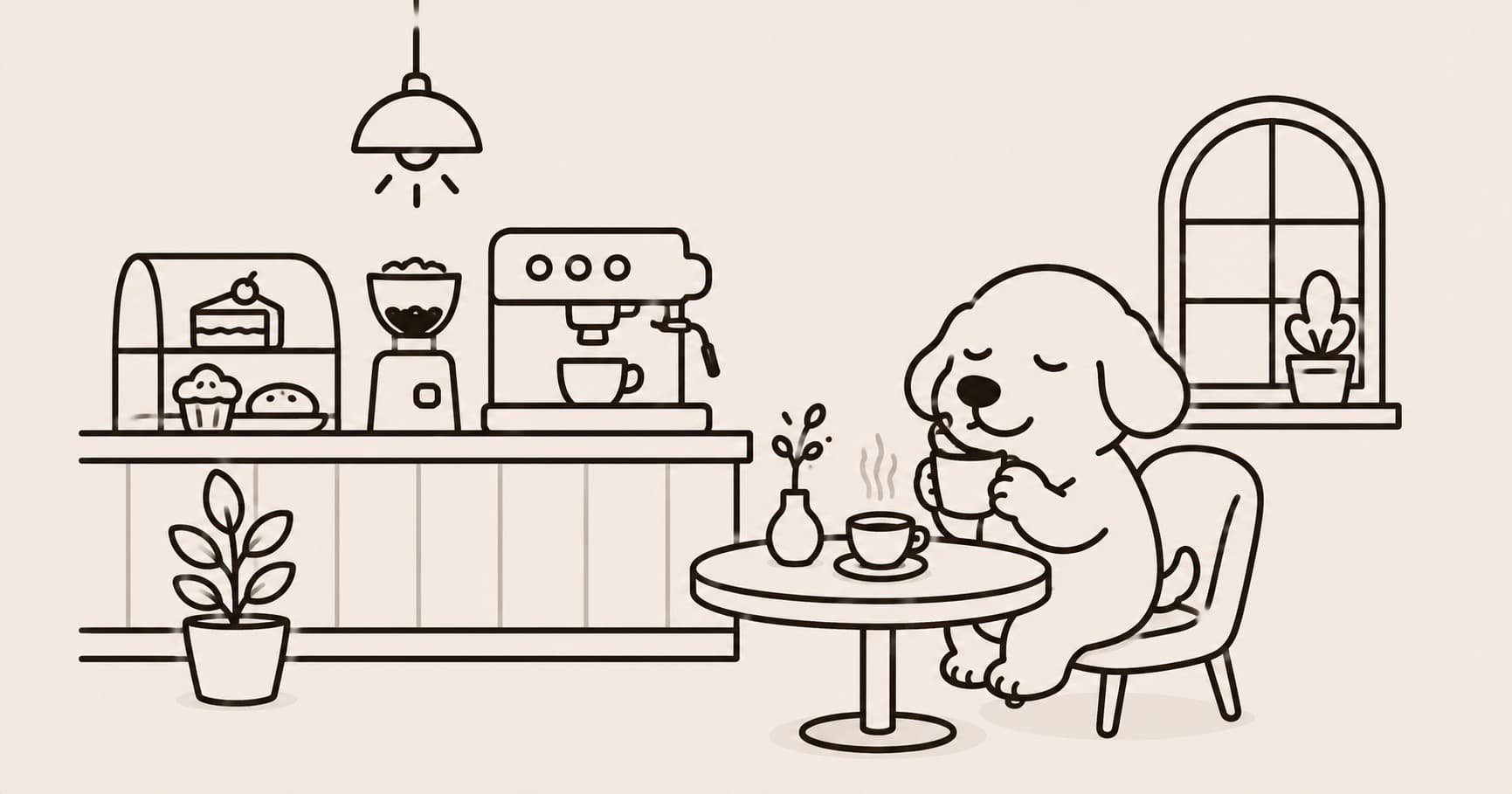
Walk down any street in Seoul. Count the cafes.
You'll stop counting quickly.
Korea has more coffee shops per person than almost anywhere else in the world. There's a Starbucks, then an independent cafe, then another, then a chain you've never heard of. Every neighborhood has dozens. Some buildings have three or four stacked on top of each other.
Koreans don't just visit cafes. They live in them.
The word
Coffee vocabulary
Ordering at a cafe
카페 order
Two friends at a cafe counter
Cafe menu basics
Why are there so many cafes?
Korea's cafe culture is about more than coffee. The cafe is a neutral space — not home, not work, not school. Koreans use cafes for:
- 공부 (gongbu, studying) — students spend entire days in cafes with textbooks and laptops
- 미팅 (miting, meetings) — light business meetings often happen at a cafe, not an office
- 약속 (yakssok, plans / hangouts) — "카페 갈까요?" is a standard social invitation
- 혼자만의 시간 (time alone) — a quiet table, good music, no obligation to leave quickly
Many Korean cafes have a 노 키즈 존 (no kids zone) or ask that you buy something every two hours. But plenty are open all day. A ₩5,000 iced Americano can buy you a quiet afternoon table.
Cultural note
Korea also has a remarkable variety of themed cafes — cat cafes, dog cafes, sheep cafes, board game cafes, flower cafes, book cafes, and more. These are real businesses, not novelties, and they draw regulars as much as tourists.
The cafe isn't a luxury in Korea. It's infrastructure.
🎙️ Voice generated with ElevenLabs
elevenlabs.io