정 — The bond that builds without you noticing
정 is one of the most untranslatable concepts in Korean culture. It's not love, not friendship, not habit — but it's the thing that makes leaving Korea feel heavier than you expected.
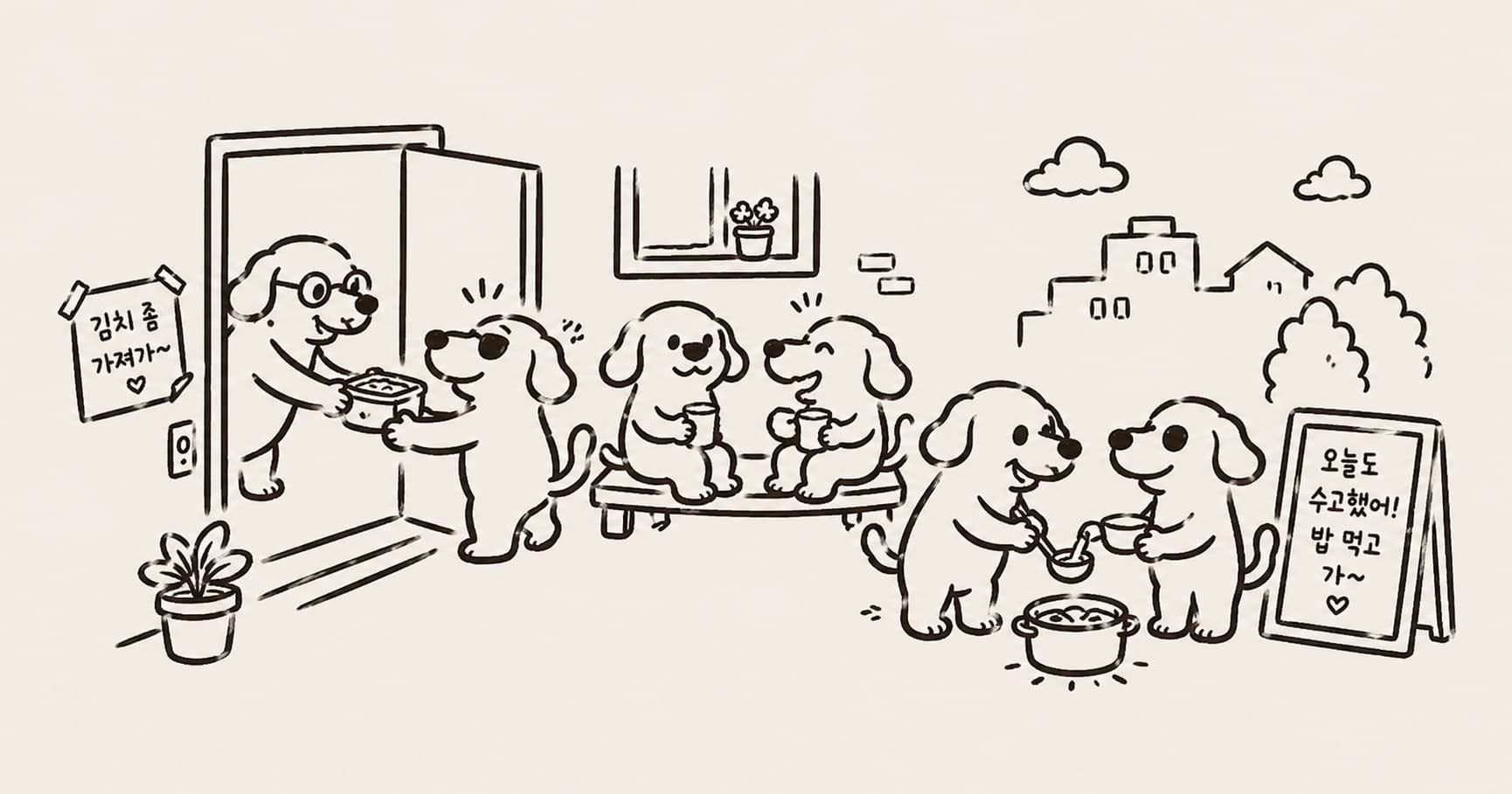
You've been going to the same 김밥 place for three months. The owner has started giving you extra 단무지 without being asked. You didn't plan to become a regular. You didn't try.
But something formed between you.
That's 정.
The word
How it forms
정 isn't declared. It isn't chosen. It accumulates — through repeated contact, shared meals, small kindnesses, time spent in the same space.
Koreans say you can develop 정 with:
- A person you see every day
- A neighborhood you've lived in for years
- A café you go to every morning
- Even a city you didn't expect to love
Hear it in action
Leaving the neighborhood
Corner store — last day before moving to a new city
미운 정
There's a phrase worth knowing: 미운 정 — hateful 정. It's the phenomenon of growing fond of someone you complain about. The difficult coworker you've spent five years with. The parent whose habits drive you crazy. The old friend who's always late. You don't like the friction. But you'd miss it.
정 doesn't only form with people you love. Sometimes it forms precisely because of the friction.
정 at a glance
Cultural note
정 helps explain a few things that puzzle outsiders about Korean culture:
Why Koreans share food. Eating from the same dish builds 정. The intimacy is intentional.
Why goodbyes feel heavy. Once 정 has formed, separating from it has real weight. People don't leave casually.
Why strangers help strangers. A stranger asking for directions might end up being walked there. The effort is small — but it's the beginning of something.
정 is why people who visit Korea for a few weeks often find themselves wanting to come back. Not because of the food or the cities, though those are real. Because something quiet formed while they weren't looking — and leaving it behind costs more than they expected.
🎙️ Voice generated with ElevenLabs
elevenlabs.io