Start typing to search.
Real Korean
Everyday phrases, expressions, and the language Koreans actually use — no textbook Korean here.
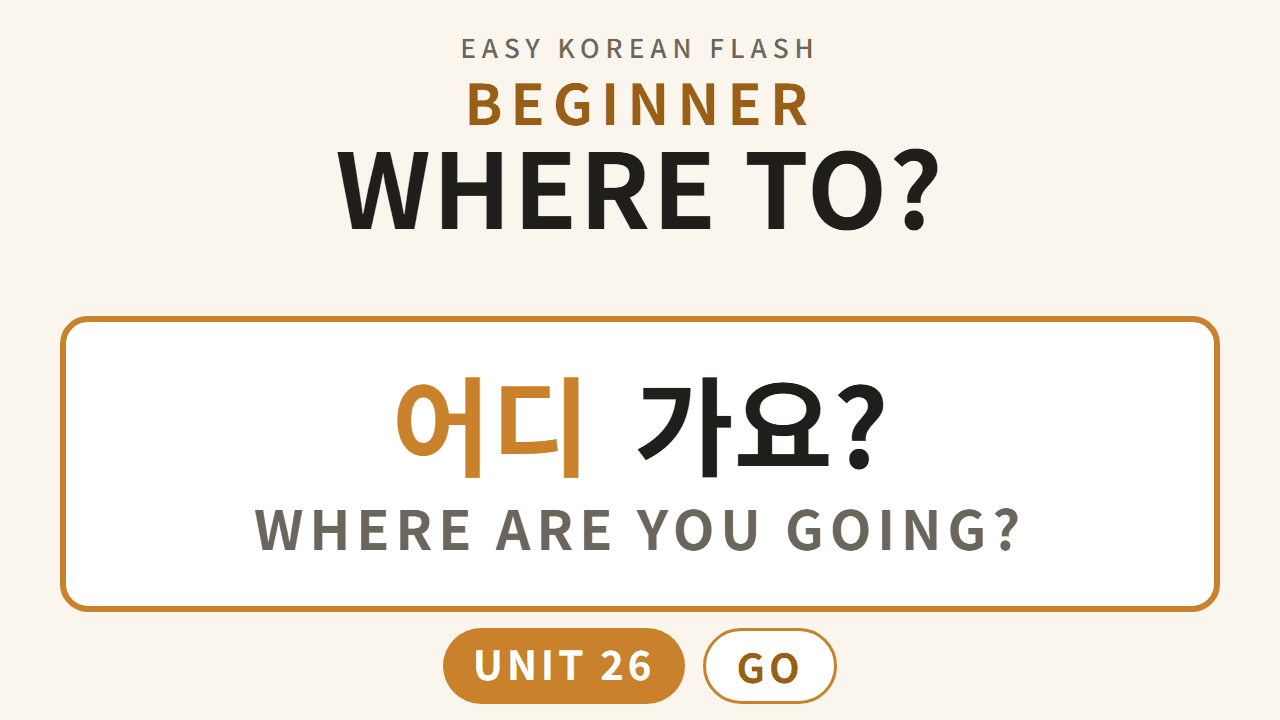
Ask and say where you're going in Korean with 어디 가요? and 학교에 가요, tell 가요 from 와요, and add 같이, 먼저 and 다시.
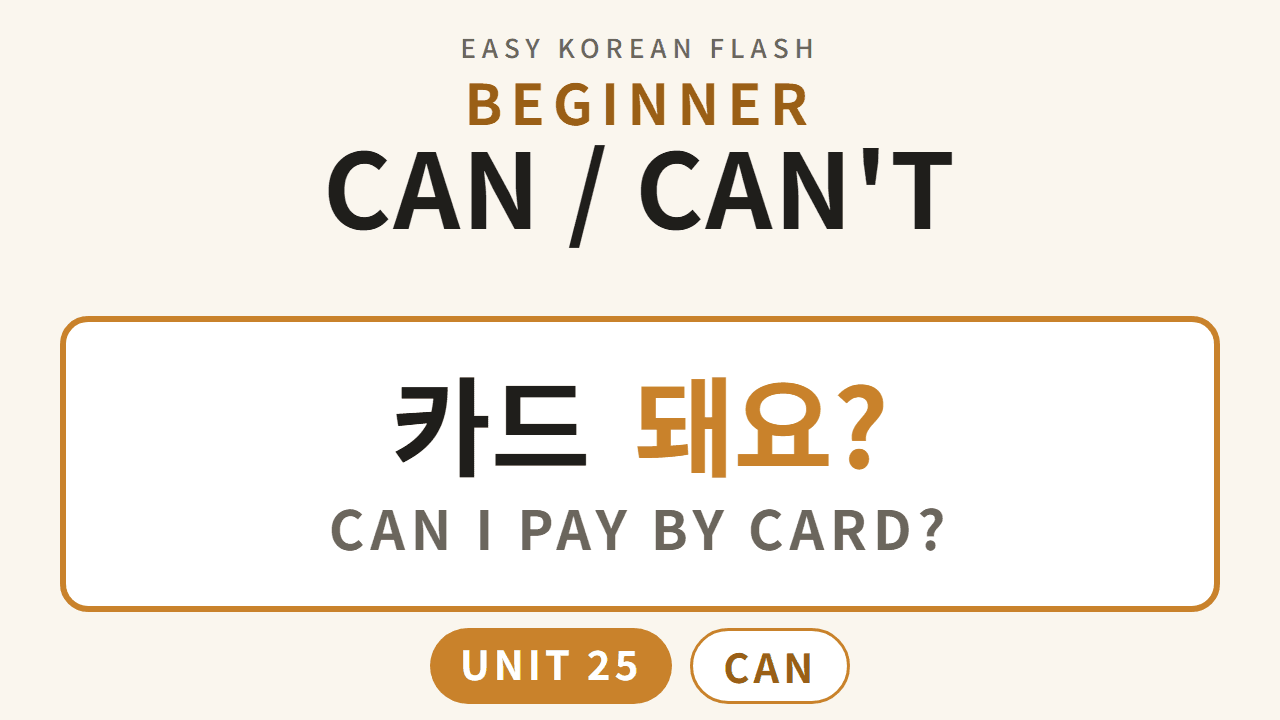
Say what you can't do in Korean with 못, what you do well with 잘, use 할 수 있어요, and ask 카드 돼요? at a shop.
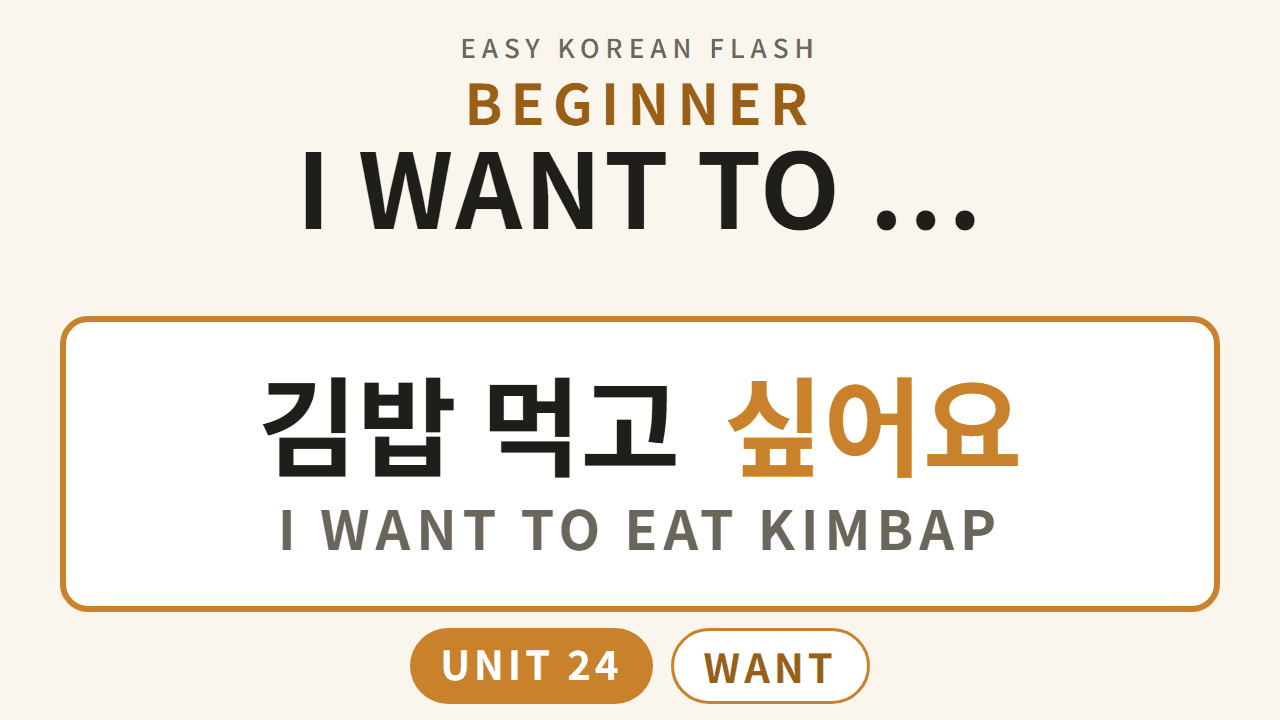
Say what you want to do in Korean with 가고 싶어요, 먹고 싶어요 and more, ask 뭐 하고 싶어요?, and give a polite no.
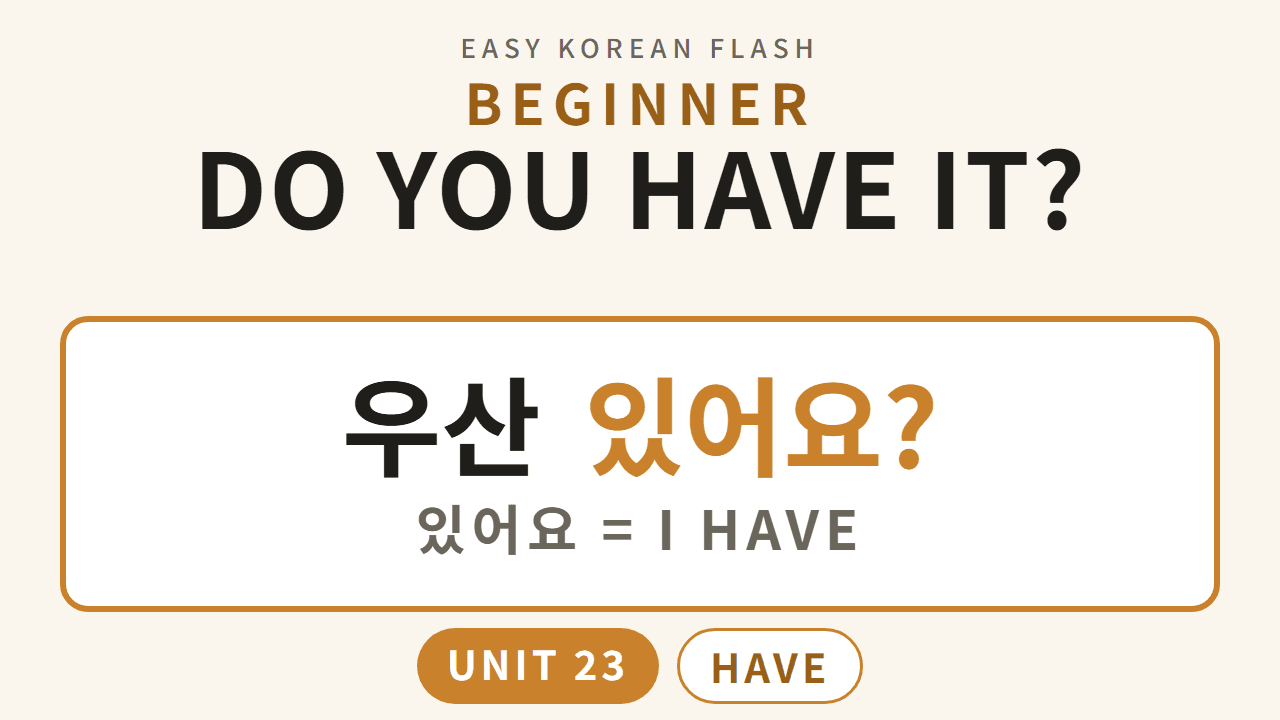
Say what you have and don't have in Korean with 있어요 and 없어요, ask “Do you have …?”, count with 개, and use 여기 있어요.
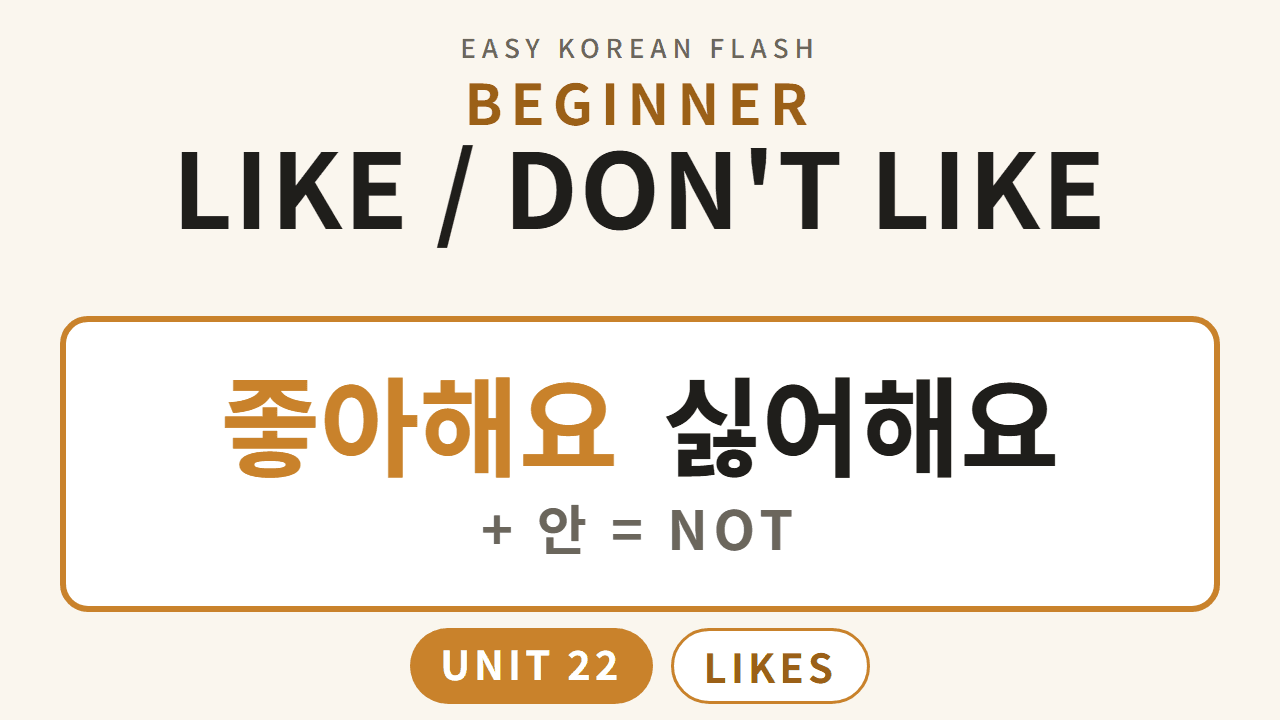
Say what you like and don't like in Korean: use 좋아해요 and 싫어해요, then say “not” with 안 and put it right before the action.
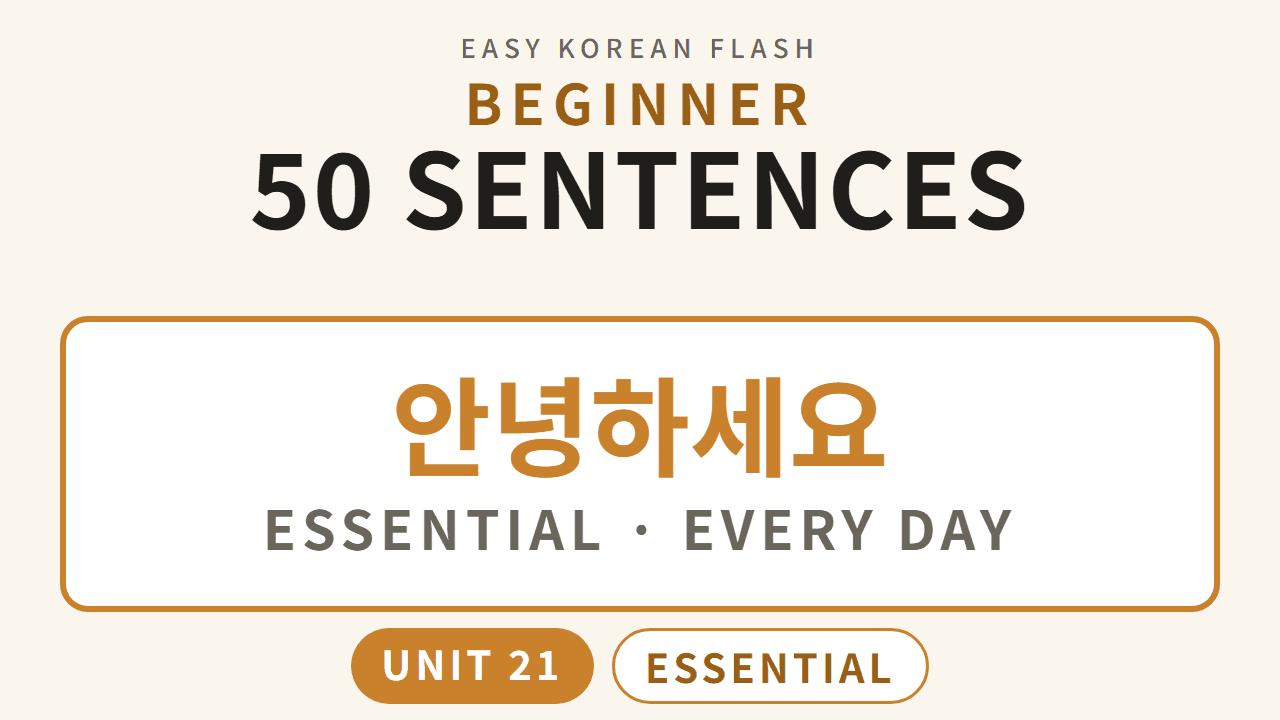
Fifty essential Korean sentences for beginners in five missions: hello and polite words, about you, ask and find, order and shop, and every day. No new words.
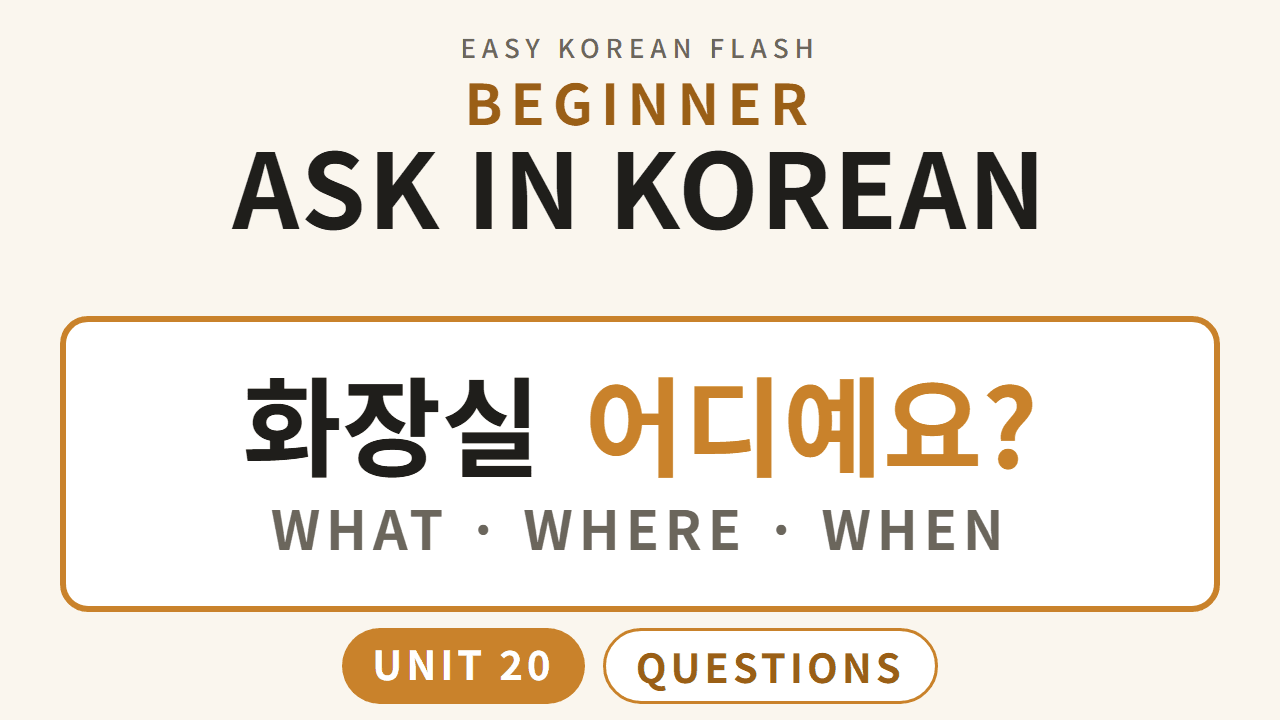
Ask questions in Korean: make yes/no questions with a rising voice, then use 뭐, 누구, 어디, 언제, 몇, 얼마 and 왜 with one simple idea.
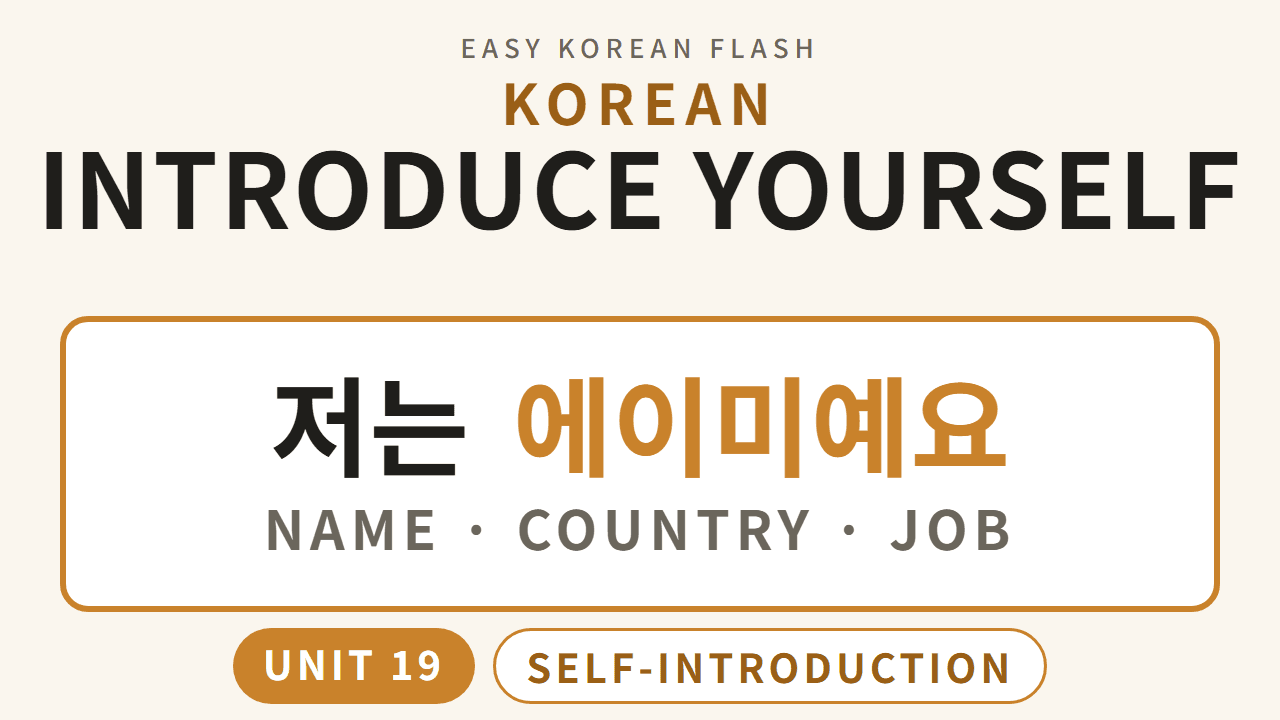
Introduce yourself in Korean: write your name in Hangul, say your country and your job, and use the 이에요 / 예요 ending with one simple test.
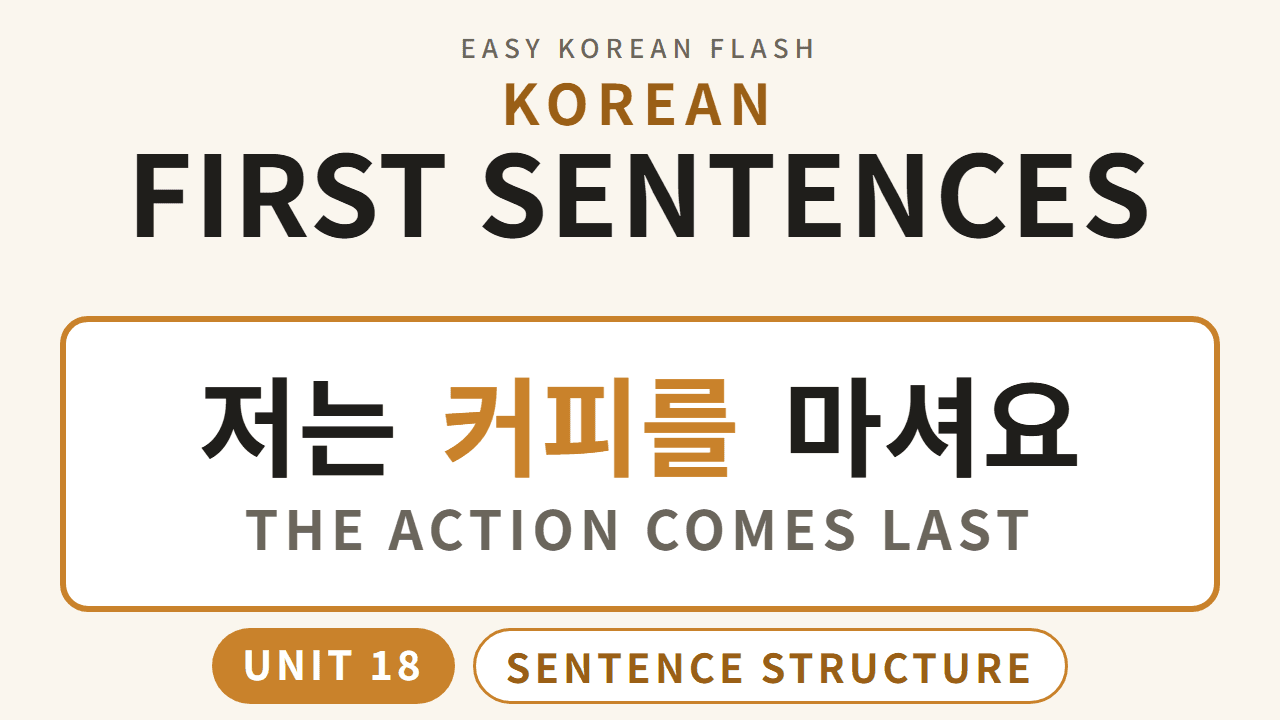
Learn how Korean sentences work: the action comes last, plus three tiny tags (는/은, 를/을, 에) and one simple test to choose between them.
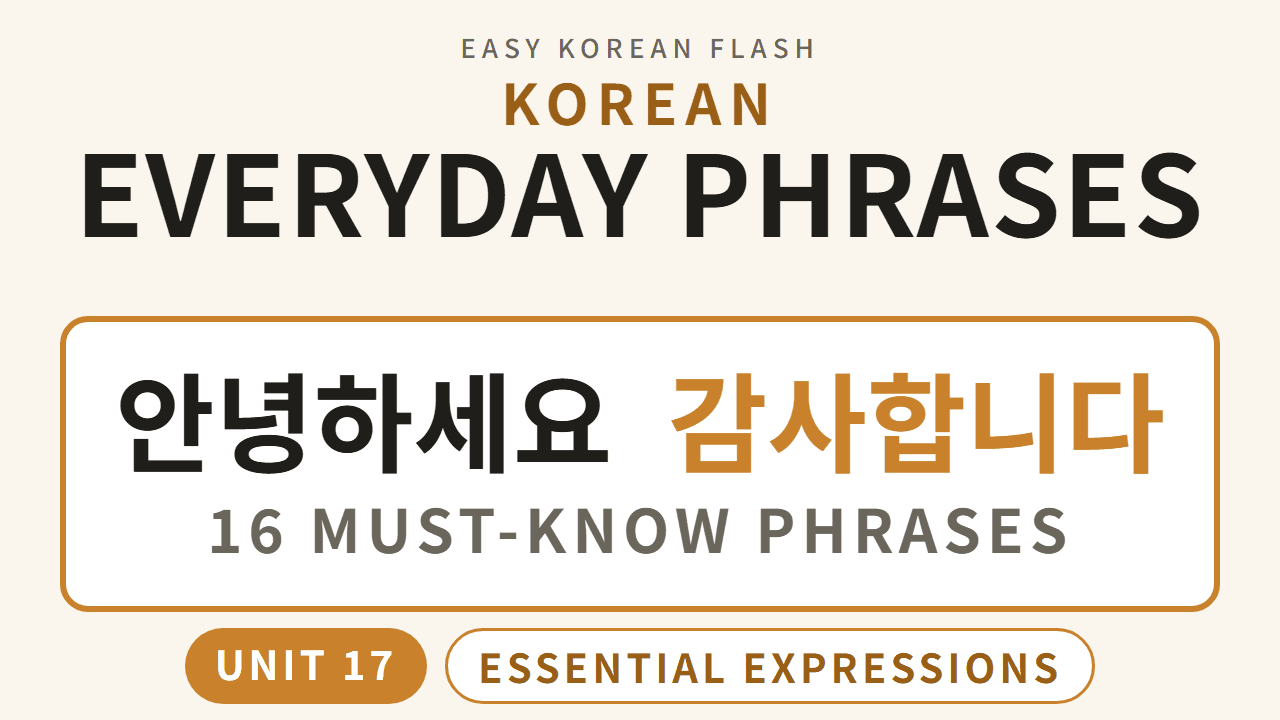
Learn 16 everyday Korean phrases for hello, goodbye, thanks, sorry, yes, no and excuse me, and pick the right one for each moment.
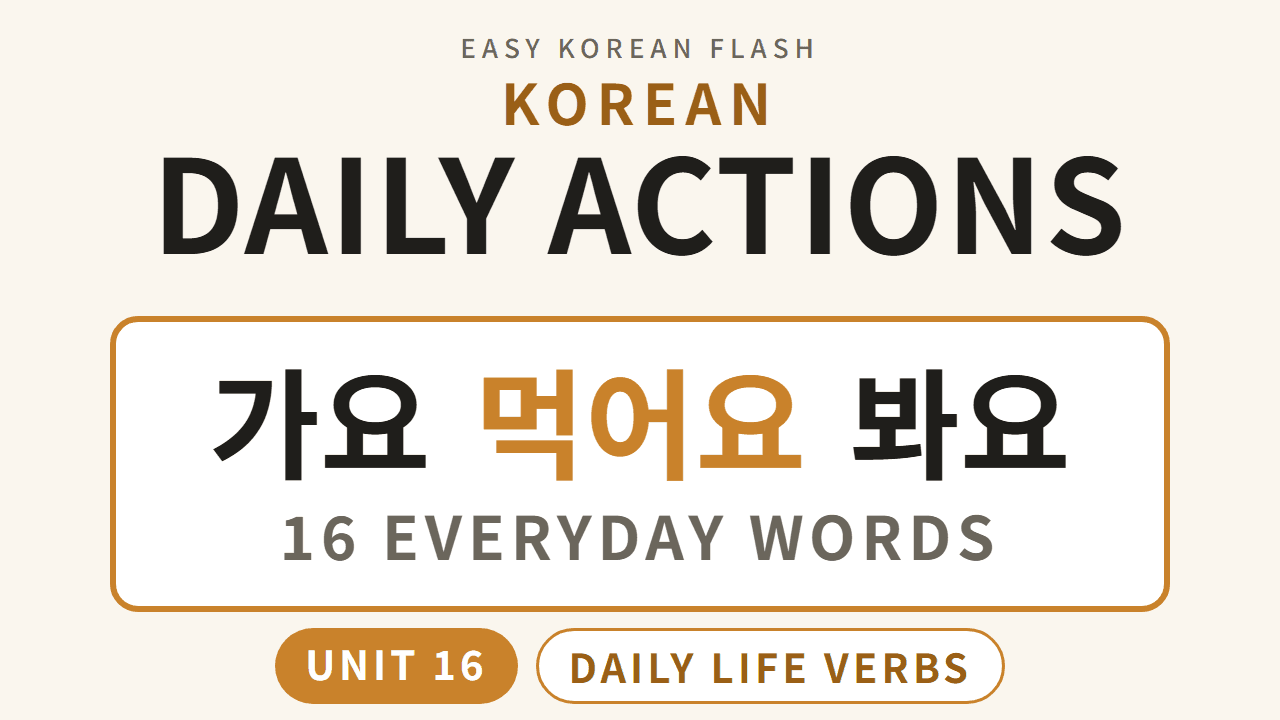
Learn 16 everyday Korean action words like 가요, 먹어요 and 봐요, see why they all end with 요, and describe your whole day in Korean.
Read Korean prices like 천 원 and 만 원, point with 이거 · 그거 · 저거, and use two shopping phrases right away: 이거 얼마예요? and 이거 주세요.
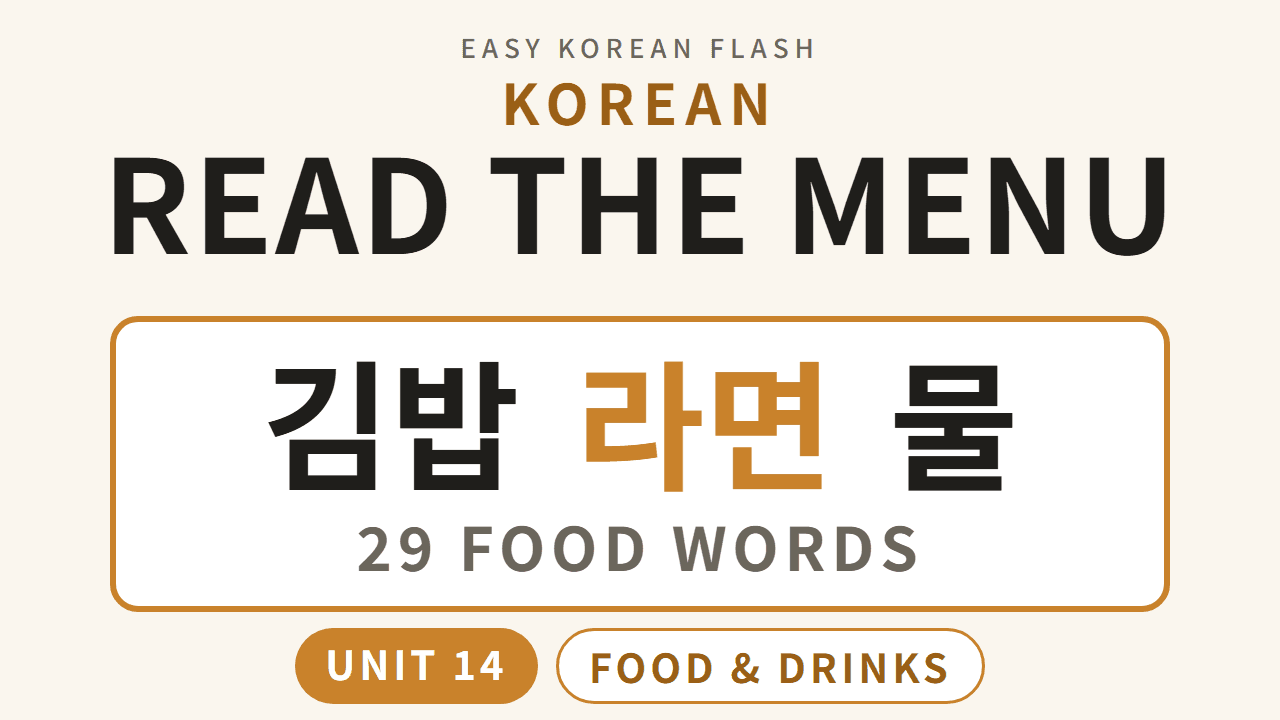
Learn 29 Korean food and drink words, from rice and kimbap to fruit and cola, then read a whole menu board. Read the menu, and you can eat!
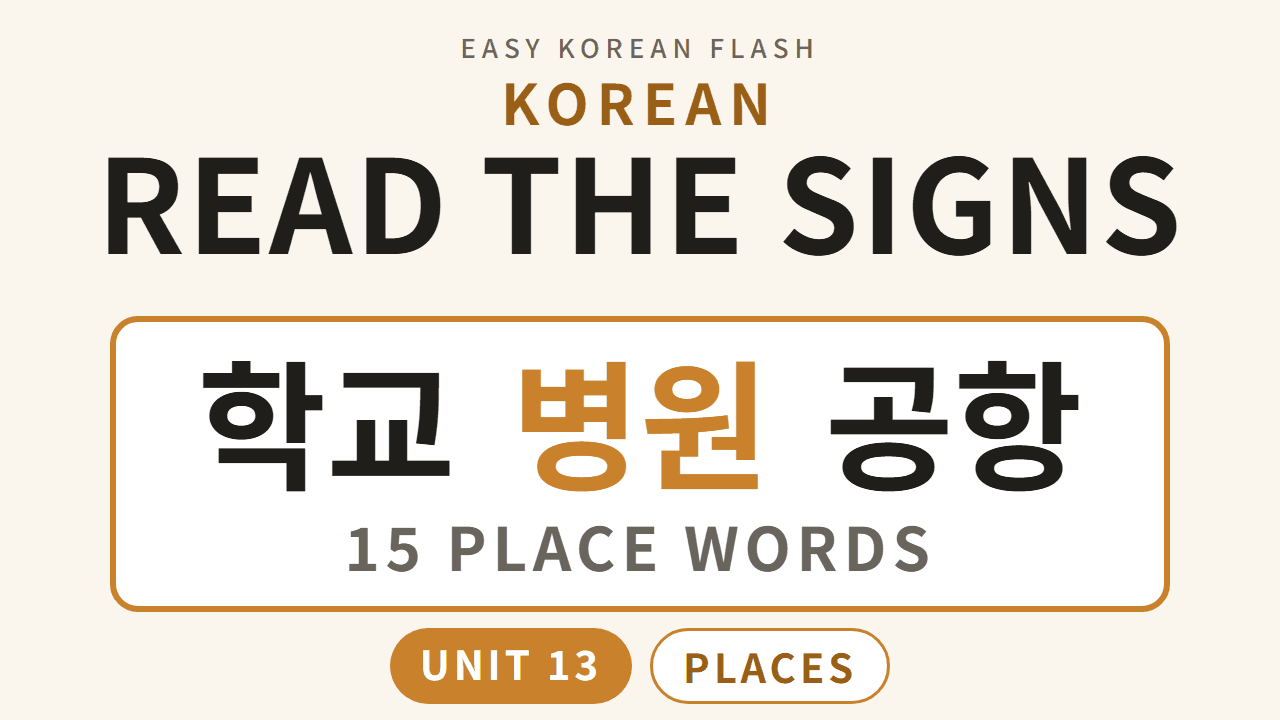
Learn 15 Korean place words, from school and hospital to airport and library, plus the three pointing words 여기, 거기, 저기. Read the sign, and you know the place.
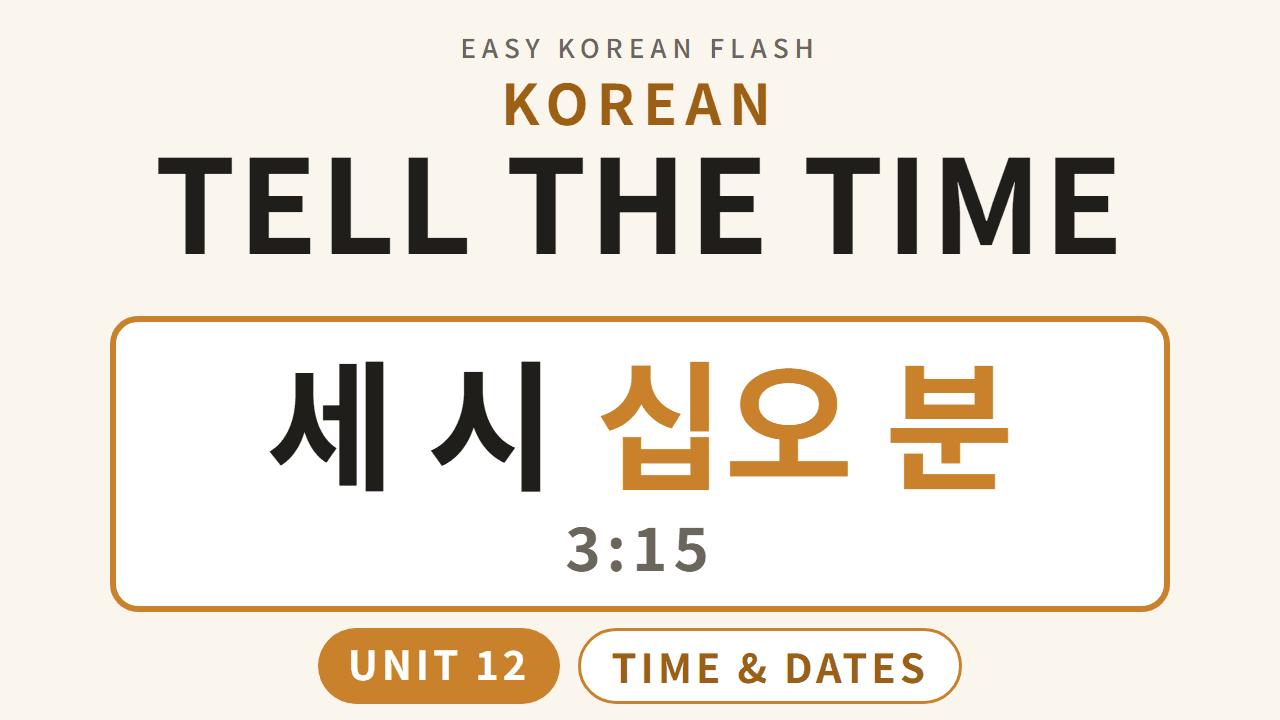
Tell the time in Korean, name every day of the week, and read a date. Hours use one number set, minutes use the other. Plus Hangul Day: 시월 구일.
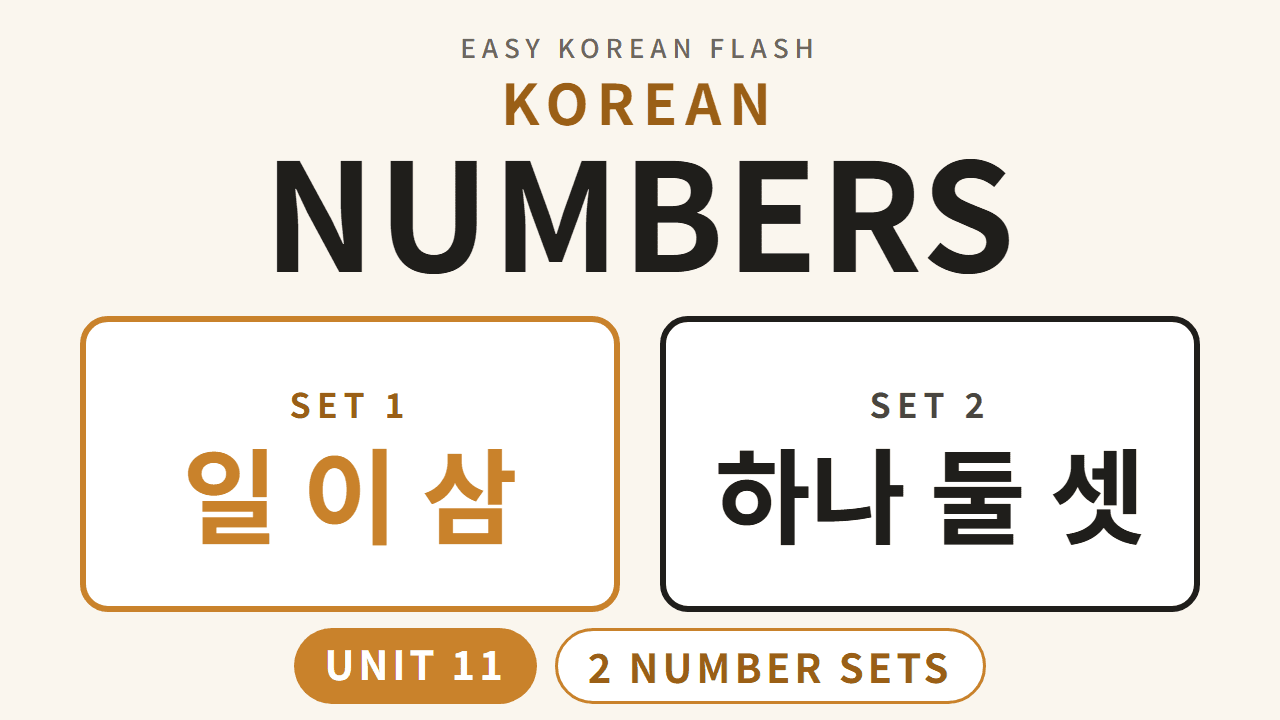
Korean has two number sets, and each has its own job. Learn 1-10 in both, build numbers up to 99, and read real Korean phone numbers.
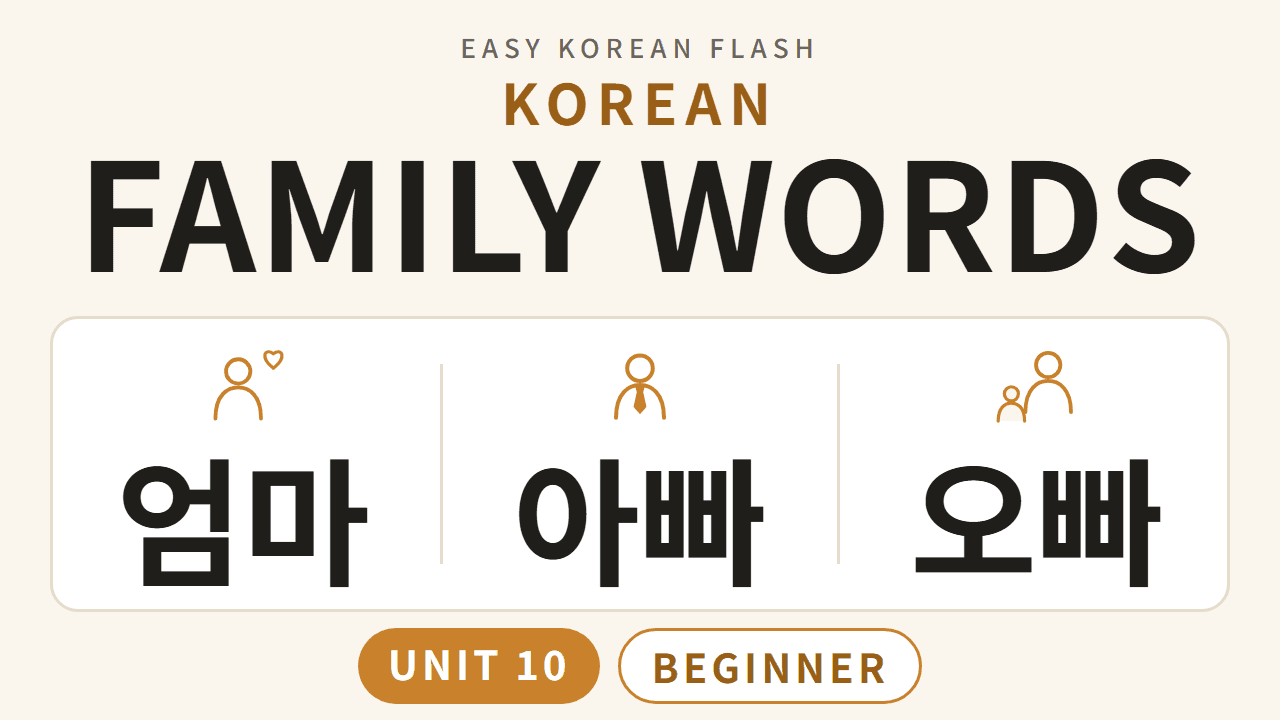
Your first 16 Korean words: mom, dad, grandparents, friends and the older brother puzzle (형 vs 오빠). Everyday vs formal, and casual vs polite “I”.
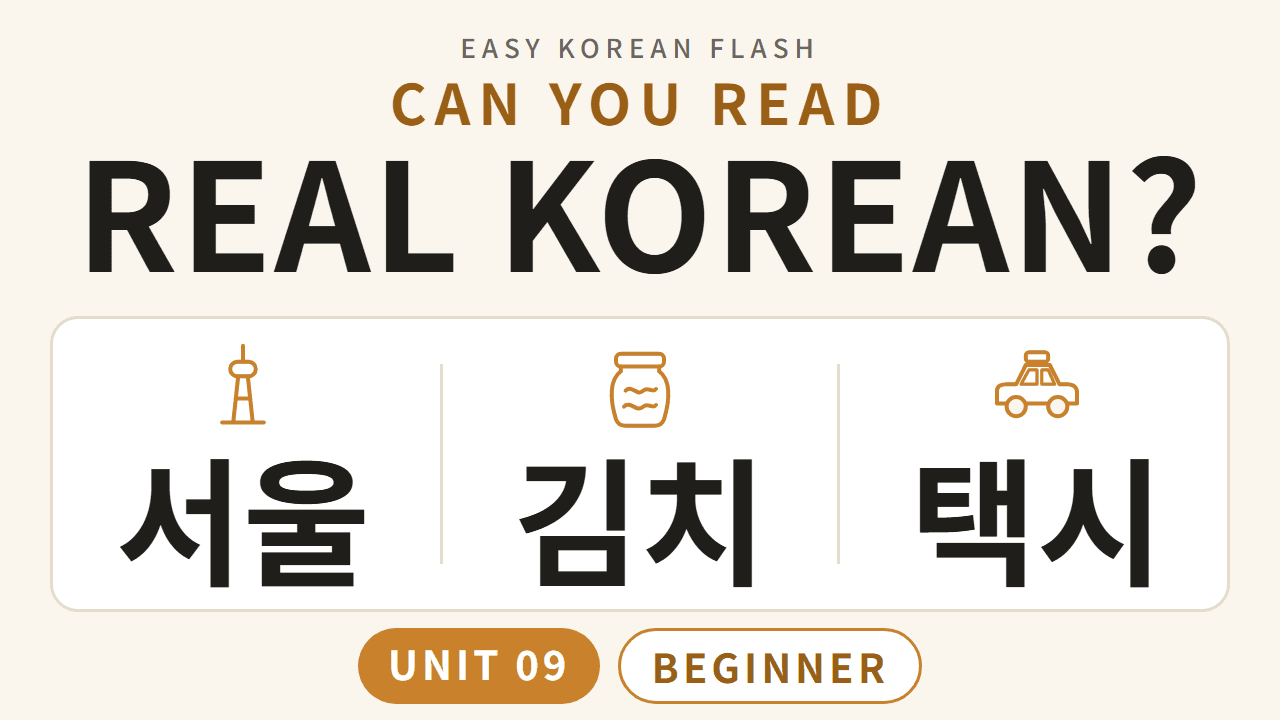
No new letters today. Use everything from Units 1–8 to read real Korean words: kimchi, subway, street signs and more. Hangul graduation starts here.
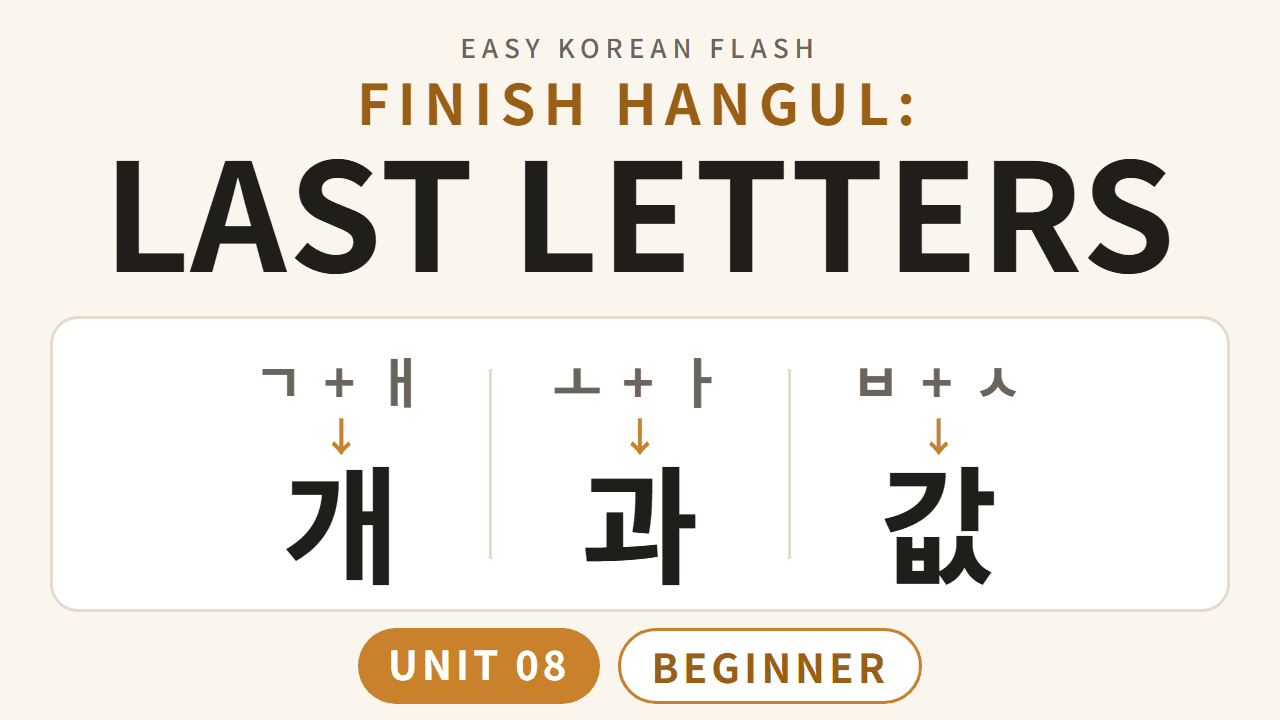
Meet the last Hangul letters: twin vowels (ㅐ ㅔ), slide vowels (ㅘ ㅝ ㅟ ㅚ ㅢ) and the crowded bottom (닭, 값, 여덟). Read 13 real words.
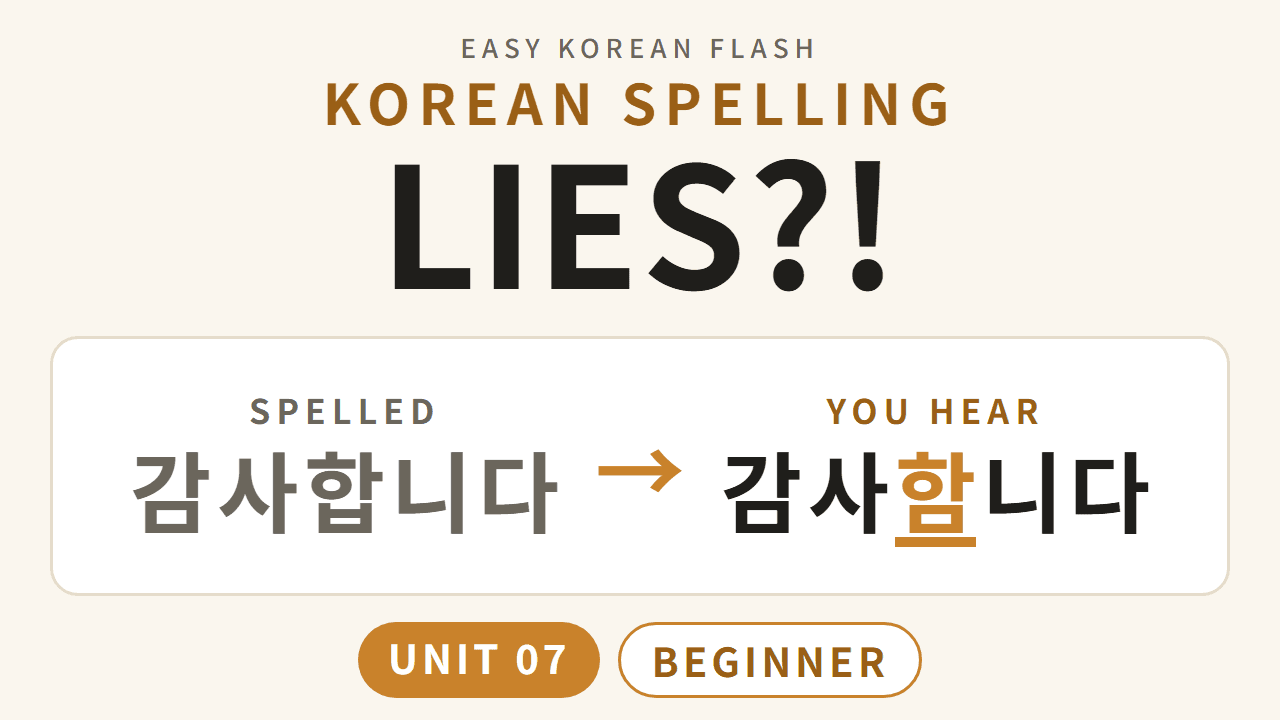
Why does 감사합니다 sound like 감사함니다? Learn the 4 basic Korean pronunciation rules (linking, nose sounds, tight sounds, and the shy ㅎ) and read 14 real words.
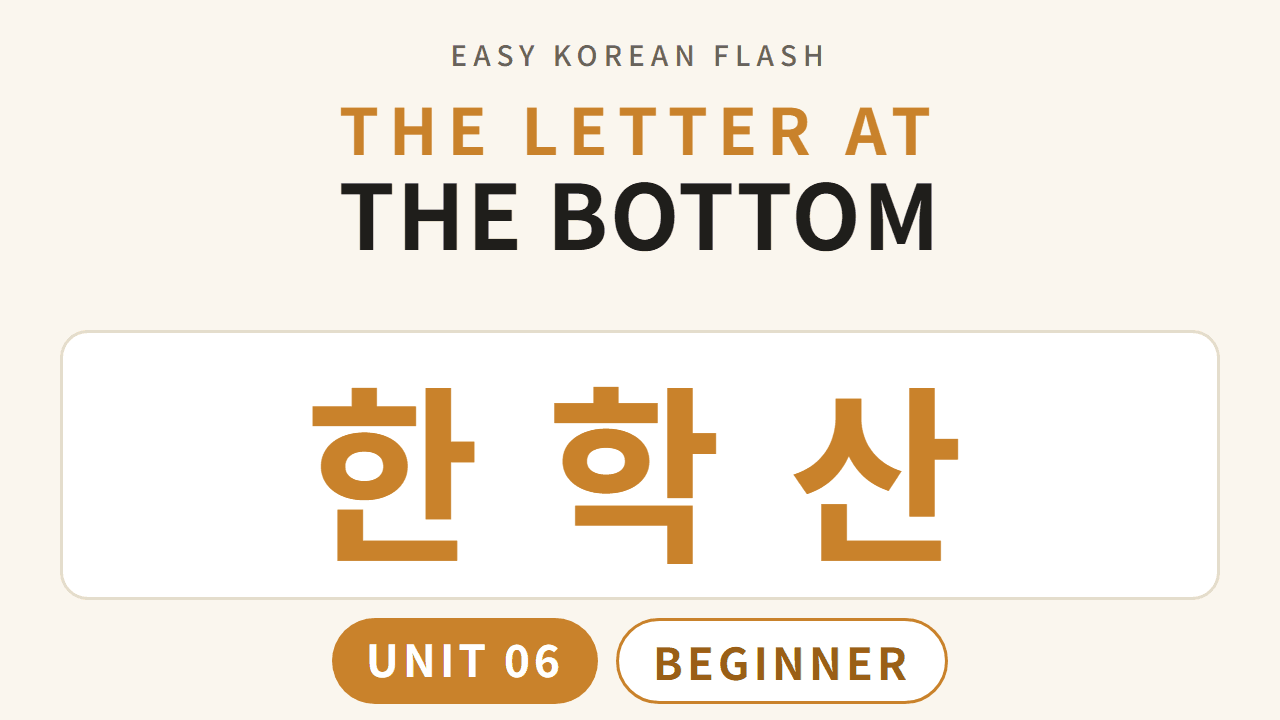
What is the letter at the bottom of a Korean block? Learn 받침 (final consonants), the 7 ending sounds, and read 12 real words.
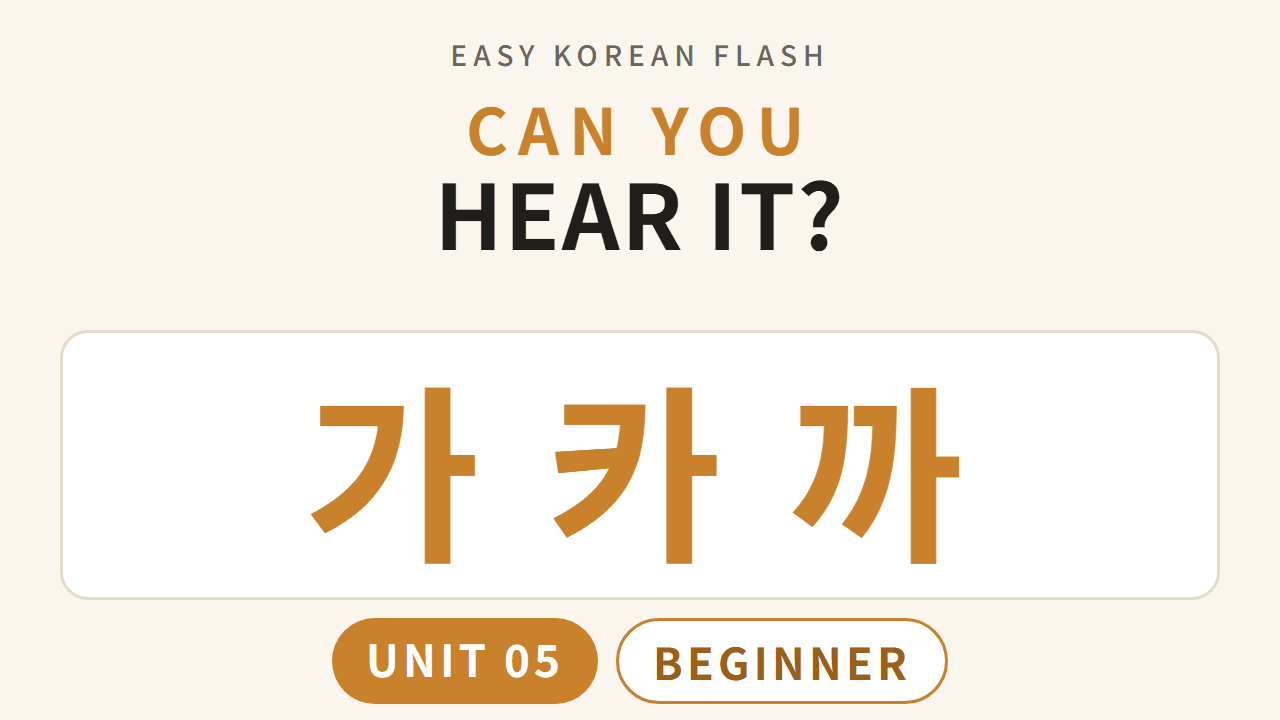
Can you hear the difference between 가, 카 and 까? Learn plain, puff and tight Korean sounds, meet the five twin letters, and read 9 real words.
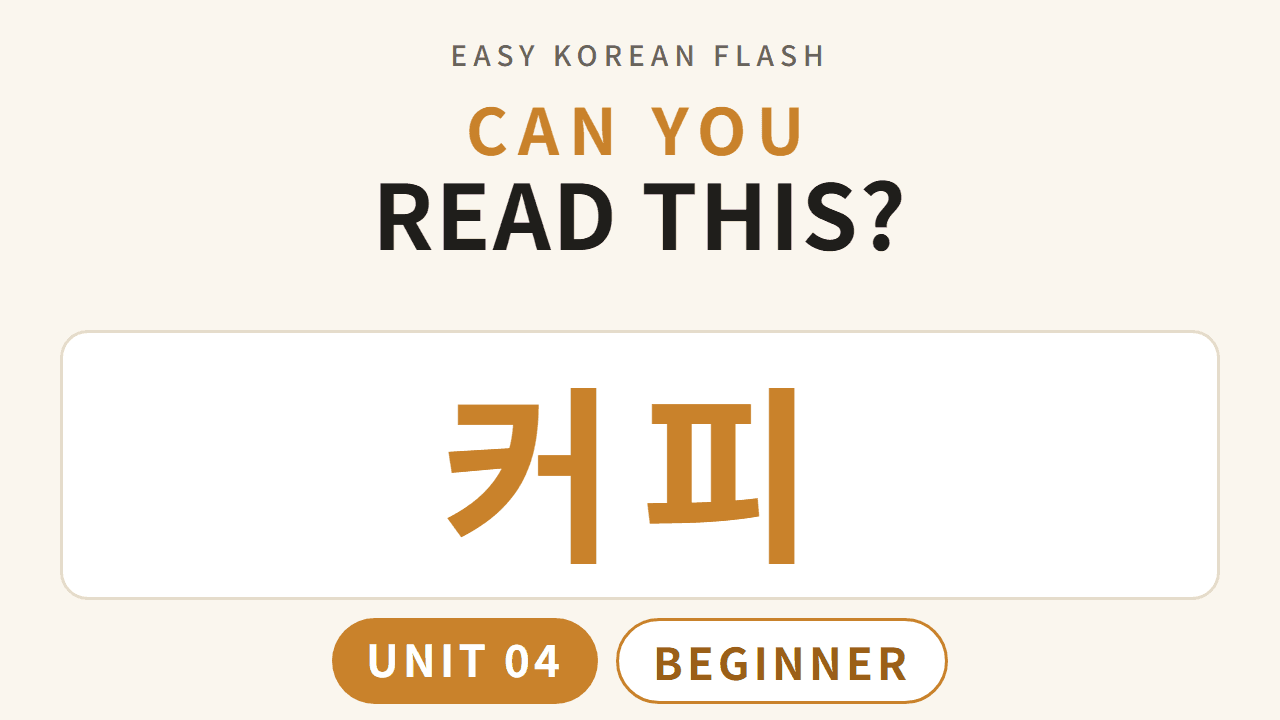
Blocks in a row make words. Learn a 3-step method (split, decode, say it smoothly) and read 18 real Korean words, no memorizing needed.
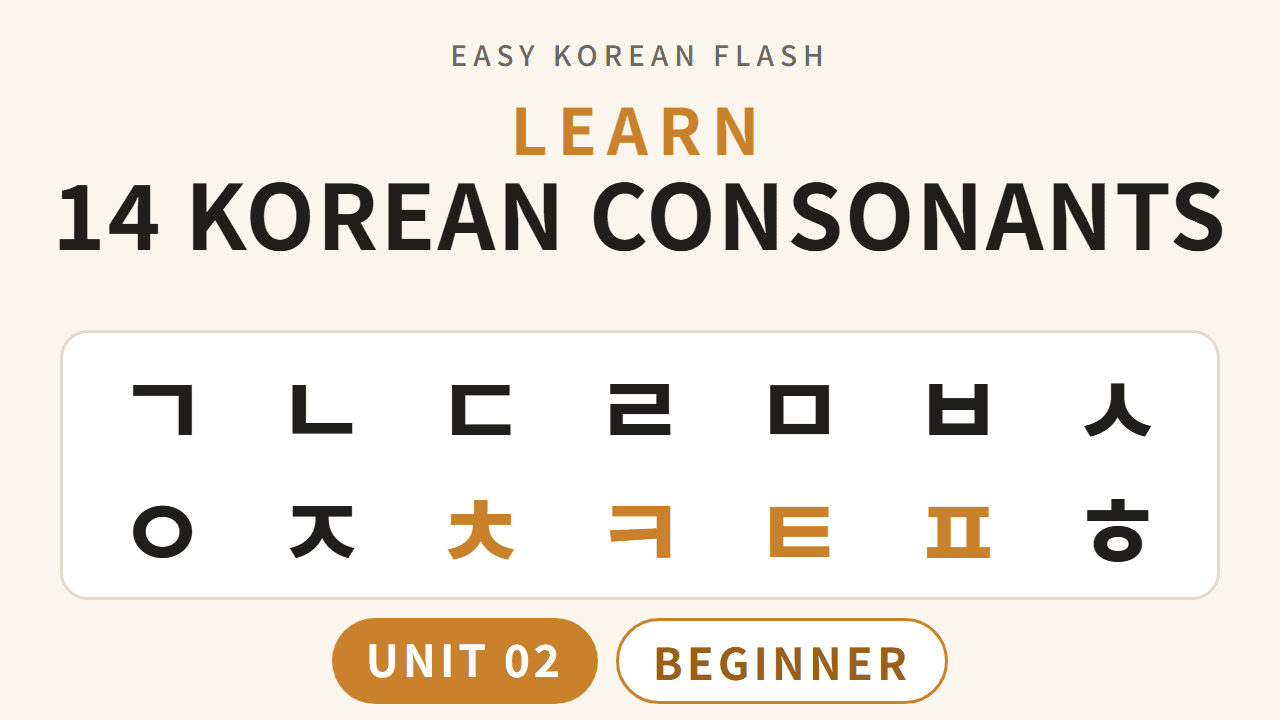
Learn the 14 basic Korean consonants, their names and sounds, and how they join vowels to make syllables.
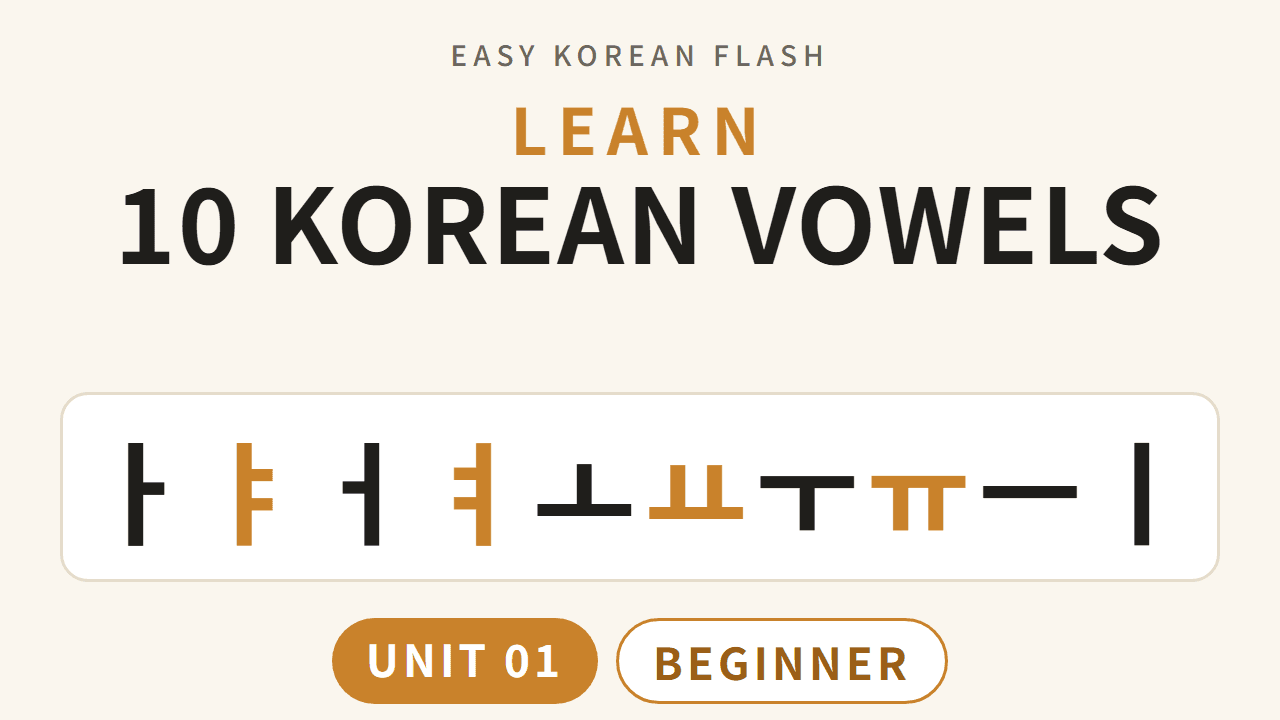
Learn the 10 basic Korean vowels, how to say them, and how to read your first four Korean words.
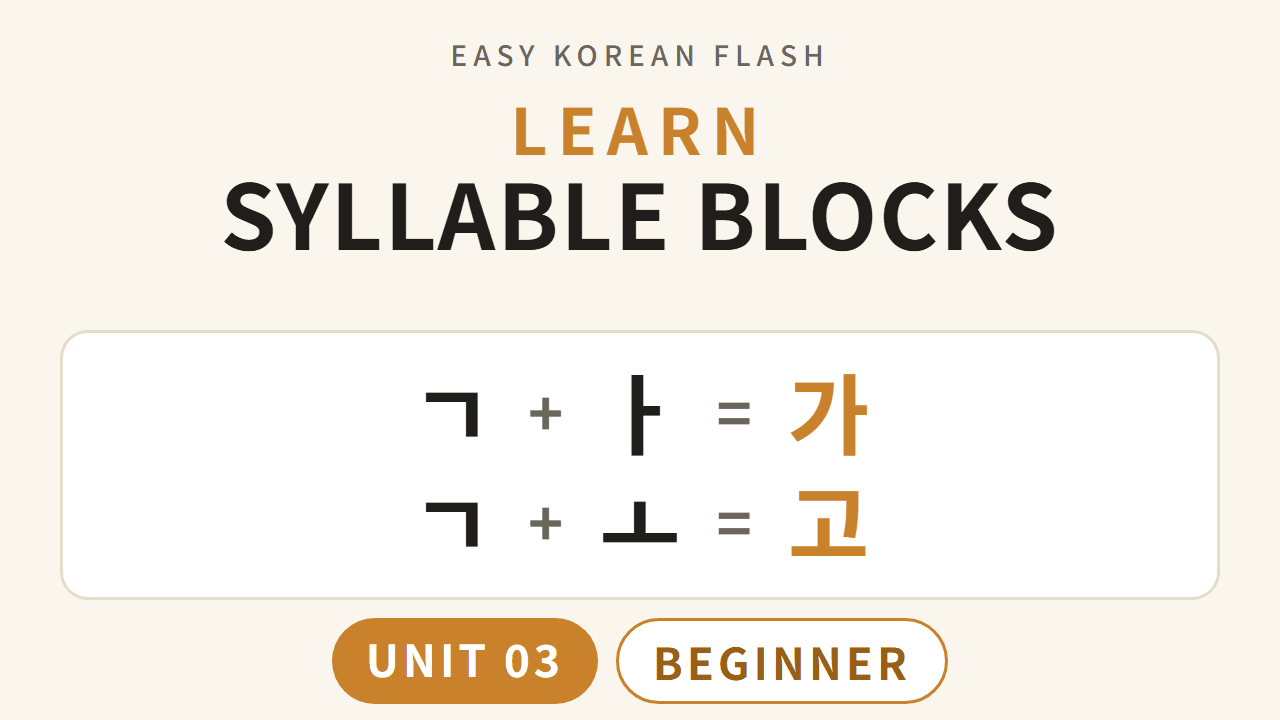
Tall vowels go on the right, flat vowels go below. Learn the two patterns that decide where every Korean letter goes.
One phrase. Five meanings. Koreans use 괜찮아요 to say they're fine, decline offers, forgive mistakes — and sometimes quietly tell you the opposite.
Forget the textbook. These are the 10 phrases you'll hear on the subway, in group chats, and over dinner — the ones nobody teaches but everyone uses.
There's no good English translation for 수고 많으셨어요 — and that gap says a lot about what Korean culture values.
Saying no in Korean is rarely direct. 다음에요 — 'next time' — is how Koreans decline gracefully without closing the door.
You can't learn Korean without learning 아이고. It's not just a word — it's a full emotional range compressed into three syllables.
The phrase that buys you time in any situation — from flagging down a taxi to holding the elevator. Small word, huge usefulness.
Koreans don't say 'How are you?' — they ask if you've eaten. Here's why this one question says everything about Korean culture.
The most common question you'll hear in Seoul. Learn how Koreans casually check in on each other — and why it's not as nosy as it sounds.
These five phrases will get you through markets, restaurants, subway stations, and the inevitable moment you get completely lost — no Korean background needed.