Korean Final Consonants (받침): The 7 Ending Sounds
What is the letter at the bottom of a Korean block? Learn 받침 (final consonants), the 7 ending sounds, and read 12 real words.
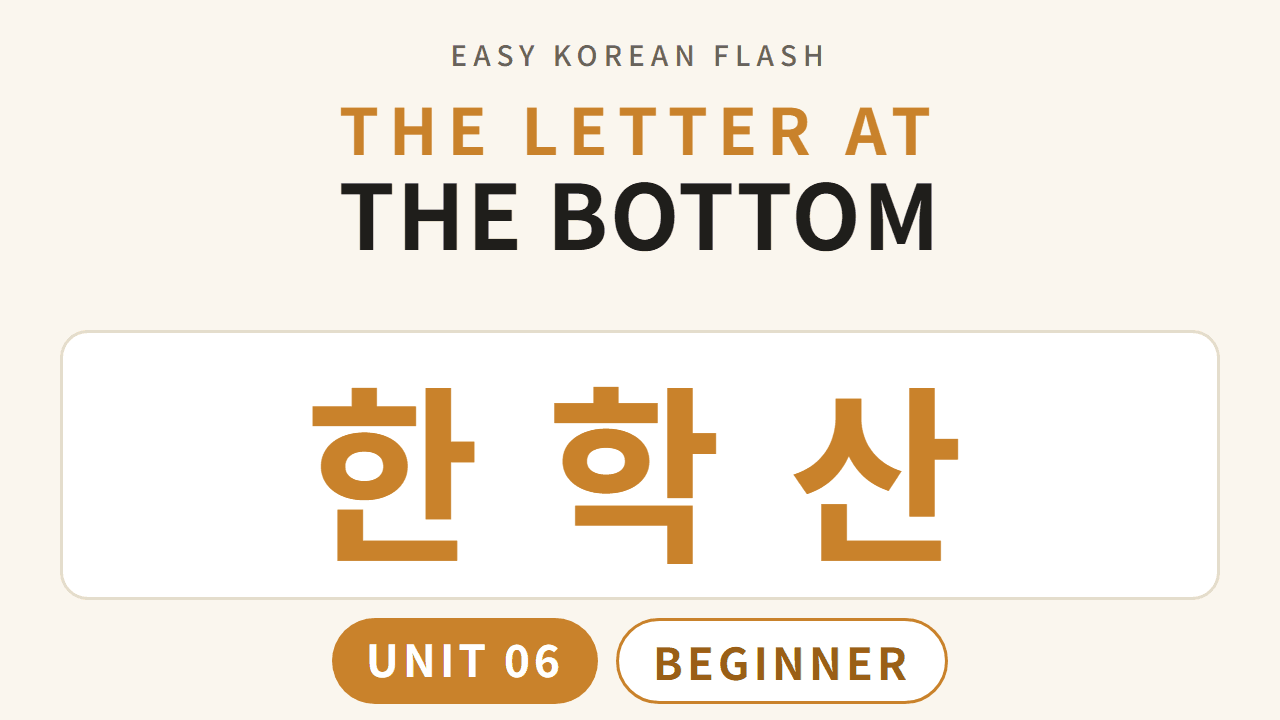
By the end of this lesson you will: read a block with a bottom letter, hear the 7 ending sounds, know why many letters share one ending, and read 12 real Korean words.
Remember these two words from Unit 04? 학교 · 한국
Each block had a mystery letter hanging at the bottom. We said, "Later." Today is later!
That bottom letter is called a final consonant. In Korean, 받침 (batchim).
🎧 This post goes with the Unit 06 video. The English comparisons are only guides, so listen to the Korean audio in the video and repeat. Ending sounds are hard to hear at first, and that's normal.
Mission 1: the bottom slot
Every block has a tiny room at the bottom. Sometimes a letter lives there.
You already know 다. Add one letter in the room: 단.
| Top part | Bottom letter | Block |
|---|---|---|
| 다 | ㄴ | 단 |
| 가 | ㄴ | 간 |
| 바 | ㄴ | 반 |
Read the top first. Then the bottom. 다 → 단.
The ending sound is short. Don't add a vowel after it: say 단, not "dan-uh."
Same block. One short sound at the end. No extra vowel.
Mission 2: sounds that keep going
These four endings can last a moment, so you can hold them.
| Bottom letter | Block | How it feels |
|---|---|---|
| ㄴ | 단 | Tongue tip just behind your top teeth: "nnn" |
| ㅁ | 담 | Lips closed: "mmm" |
| ㅇ | 당 | "ng," like the end of sing |
| ㄹ | 달 | "L," like the end of ball |
The ninja letter wakes up
Remember the silent ㅇ at the top of a block? Like a ninja, you couldn't hear it.
At the bottom, it wakes up. It sounds like "ng."
- ㅇ on top = silent (아)
- ㅇ at the bottom = "ng" (앙, 당)
Mission 3: the stop sounds
Freeze! These endings stop the sound, and your mouth stays still.
Careful: this is where English speakers like to add a little vowel. Keep it clean.
Each stop sound is made at the same spot in the mouth as a keeps-going sound. The only difference is whether the sound keeps going or stops.
| Back of the tongue | Tongue tip | Lips | |
|---|---|---|---|
| Keeps going | 당 (ㅇ) | 단 (ㄴ) | 담 (ㅁ) |
| Stops | 닥 (ㄱ) | 닫 (ㄷ) | 답 (ㅂ) |
- 닥: the back of your tongue goes up and stays there.
- 닫: your tongue tip stays up.
- 답: your lips stay closed. Don't pop them open.
ㄹ (달) has no stop partner. It shares the tongue-tip spot with 단.
Same spot in the mouth. One keeps going. One stops.
Mission 4: many letters, one sound
At the bottom of a block, Korean has only seven ending sounds. But there are more than seven letters. So some letters team up and share one sound.
| These letters | Sound like | Example |
|---|---|---|
| ㅅ ㅆ ㅈ ㅊ ㅌ ㅎ | 닫 (ㄷ) | 옷 (clothes) · 꽃 (flower) |
| ㅋ ㄲ | 닥 (ㄱ) | 밖 (outside) |
| ㅍ | 답 (ㅂ) | 앞 (front) |
Remember the puff and twin letters from Unit 05? At the bottom, they relax. No extra air. No extra tightness.
You don't need to memorize which letters go where. Just listen to the ending.
Mission 5: the word hunt
Same three steps as Unit 04: Split. Decode. Say it smoothly. Now with bottom letters!
Full method
| Word | Blocks | Meaning |
|---|---|---|
| 한국 | 한 + 국 | Korea |
| 산 | 사 + ㄴ (one block) | mountain |
| 물 | 무 + ㄹ (one block) | water |
Rapid fire
Find the bottom letter yourself before you check: 밥 · 집 · 눈 · 사람
| Word | Bottom letter | Meaning |
|---|---|---|
| 밥 | ㅂ | rice, meal |
| 집 | ㅂ | house |
| 눈 | ㄴ | eye, snow |
| 사람 | ㅁ (in 람) | person |
Bonus: 학교
| Word | Blocks | Meaning |
|---|---|---|
| 학교 | 학 + 교 | school |
학교 sounds a little different from how it's spelled. That's a sound change. We'll meet those in Unit 07.
With the four words from Mission 4 (옷, 꽃, 밖, 앞), that's twelve real words. These are for reading practice, not memorizing. Look how much you can already read!
Spot it! Quick quiz
Use your eyes first, then check the answers.
- Which block ends with the "ng" sound? A. 단 B. 당 C. 담
- Which block ends with an L sound? A. 달 B. 단 C. 답
- Which word has ㅂ at the bottom? A. 사람 B. 한국 C. 집
Answers
- B · 당 has ㅇ at the bottom
- A · 달 has ㄹ at the bottom
- C · 집 ends with ㅂ
The real test: four new words
Here come four brand-new words that were not in the video. Split off the bottom letter, then read each one.
Try them before reading on: 곰 · 별 · 문 · 입
Check your work
- 곰 = (ㄱ+ㅗ) + ㅁ → bear
- 별 = (ㅂ+ㅕ) + ㄹ → star
- 문 = (ㅁ+ㅜ) + ㄴ → door
- 입 = (ㅇ+ㅣ) + ㅂ → mouth
Listening takes time
Hearing the ending of a block is one of the hardest parts of Korean for English speakers. You don't need to get it perfect today. Listen again tomorrow, and the difference will get easier to hear.
The video also has a boss-level listening challenge, "Which one did you hear?" Try it a few days from now and see how you do.
What to remember
- A block can have a bottom letter. It's called 받침.
- Read the top part first, then the bottom letter.
- Keep the ending short, with no extra vowel.
- There are seven ending sounds. Keep going: ㄴ ㅁ ㅇ ㄹ. Stop: ㄱ ㄷ ㅂ.
- ㅇ is silent on top and "ng" at the bottom.
- Many letters share one ending sound: ㅅ ㅆ ㅈ ㅊ ㅌ ㅎ → ㄷ, ㅋ ㄲ → ㄱ, ㅍ → ㅂ.
Practice
Say each row out loud. Same spot: keeps going, then stop.
당 · 닥 단 · 닫 담 · 답
Add the bottom letter, then read:
- 가 + ㄴ = ?
- 나 + ㅁ = ?
- 자 + ㄱ = ?
- 바 + ㅂ = ?
- 다 + ㄹ = ?
- 마 + ㅇ = ?
Answers
간 · 남 · 작 · 밥 · 달 · 망
Then read the twelve words out loud, and come back tomorrow to read them again: 한국 · 산 · 물 · 밥 · 집 · 눈 · 사람 · 옷 · 꽃 · 밖 · 앞 · 학교
Next up: Unit 07, pronunciation rules. You'll see what happens when blocks meet. Sounds can link together, and some sounds change. That's why 학교 sounds a little different.
Free Workbook
Practice what you learned
Printable PDF for “Korean Final Consonants (받침): The 7 Ending Sounds” — no sign-up needed.
Unit 6 of Korean From Zero · See all lessons →