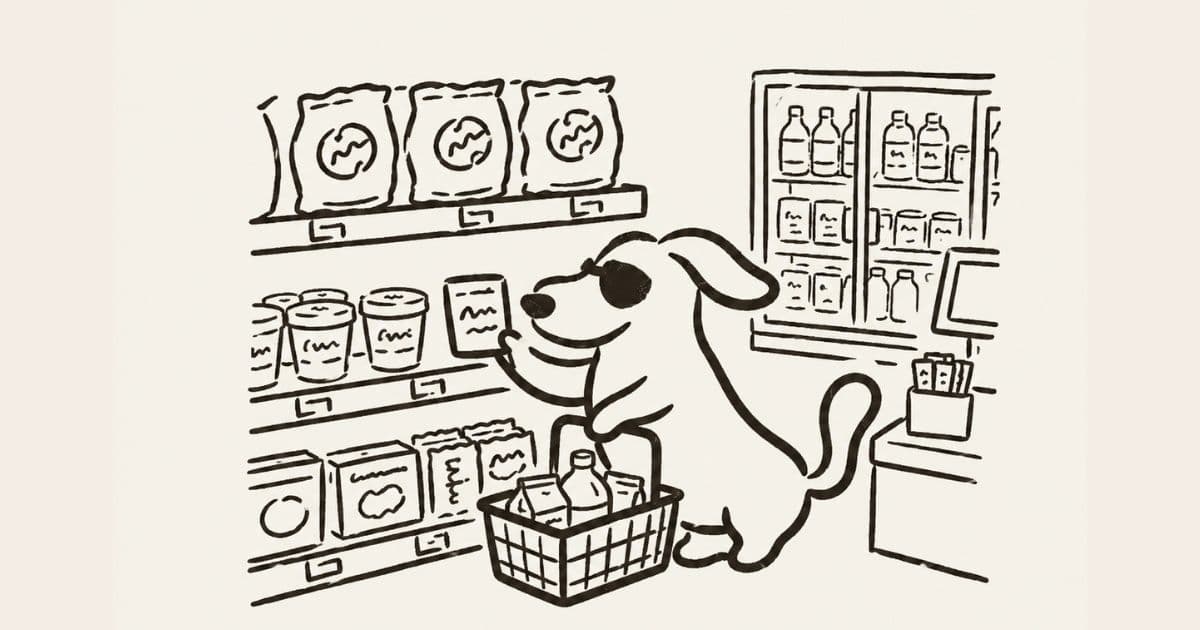
In Korea, the convenience store isn't just a place to grab snacks. It's where you eat lunch, meet friends, and spend more time than you planned. Here's the vocabulary you need.
It's midnight. You're hungry. You walk downstairs.
There's a GS25 on the corner. A CU across the street. A 7-Eleven two doors down.
You step inside, grab a triangle 김밥, pour hot water into a cup ramen, and sit at the little table by the window. A college student next to you is eating fried chicken and doing homework. An older man is reading a newspaper with a canned coffee.
No one thinks this is strange. This is just what a 편의점 is.
The word
편의점
Romanizationpyeonuijeom
Meaningconvenience store
💡 편의 (convenience) + 점 (store/shop). Pronounced pyuh-neui-jeom. The big three chains are GS25, CU, and 7-Eleven — there are over 50,000 of them across Korea.
The vocabulary
삼각김밥
Romanizationsamgak gimbap
Meaningtriangle rice ball
💡 The iconic convenience store snack. Wrapped in seaweed, filled with tuna, kimchi, bulgogi, and more. Peel the packaging in three steps — there's a numbered guide on the wrapper.
컵라면
Romanizationkeom ramyeon
Meaningcup ramen
💡 Hot water dispensers (온수기) are standard at every 편의점 counter. Wait 3 minutes. There's usually a little shelf or ledge to rest your cup while it cooks.
도시락
Romanizationdosirak
Meaningconvenience store lunchbox
💡 Pre-packed meals — rice, a main dish, side dishes — all in one container. Staff will heat it for you if you ask: 데워 주세요 (daewo juseyo).
1+1
Romanizationil peul il
Meaningbuy one get one free
💡 Said out loud as '일 더하기 일' or just '원 플러스 원'. Extremely common promotion. Walk in for one drink, leave with two — it's basically mandatory.
2+1
Romanizationi peul il
Meaningbuy two get one free
💡 The slightly more dangerous promotion. You came in for water. Now you have three.
Hear it in action
편의점 run
Two friends, late evening, deciding what to eat
A
A
배고프다. 편의점 갈래?
I'm hungry. Want to go to the convenience store?
B
B
좋아. 뭐 먹을 거야?
Sure. What are you going to get?
A
A
컵라면이랑 삼각김밥 먹으려고.
I'm thinking cup ramen and a triangle gimbap.
B
B
나는 도시락 데워 달라고 해야겠다.
I need to ask them to heat up a lunchbox for me.
A
A
아, 음료수 보니까 1+1이다. 하나 더 가져가.
Oh, the drinks are buy-one-get-one. Grab an extra one.
B
B
역시 편의점이지.
This is exactly why we come to the convenience store.
Useful phrases at the counter
데워 주세요
Romanizationdaewo juseyo
Meaningplease heat this up
💡 Hand over your dosirak and say this. The staff will put it in the microwave. Standard, expected, no awkwardness required.
봉투 필요하세요?
Romanizationbongtu piryohaseyo?
Meaningdo you need a bag?
💡 The cashier will ask this every time. Bags cost extra in Korea (around 20–50 won). Most regulars just say 괜찮아요 and carry things out.
포인트 카드 있으세요?
Romanizationpointeu kadeu isseuseyo?
Meaningdo you have a points card?
💡 Every chain has its own app and loyalty system. GS25 has The Point, CU has CU멤버십. If you're in Korea long-term, it's worth getting one.
At the counter
The full counter exchange — what they say and what to say back:
SituationCashier saysYou say
Asking about a bag봉투 필요하세요?괜찮아요 (no thanks)
Points card포인트 카드 있으세요?없어요 (I don't have one)
Heating food—데워 주세요 (please heat this)
Promo item1+1이에요!하나 더 가져갈게요 (I'll grab another)
Cultural note
편의점 culture in Korea is genuinely different from anywhere else. The stores are open 24 hours, stocked daily, and designed to function as a casual dining space — the eat-in area (이트인 코너) is a feature, not an afterthought.
For many people living alone in small apartments, the 편의점 is a kind of neighborhood anchor. You see the same staff, eat at the same small table, buy the same coffee on the way to work. It's transactional on the surface — but over time, a little 정 forms.
The chains also release seasonal and limited-edition items constantly: cherry blossom drinks in spring, pumpkin flavors in autumn, collaboration snacks tied to whatever drama or game is popular right now. Following 편의점 new releases is a genuine hobby for some Koreans.
If you're visiting Korea and want to eat like a local, skip one restaurant meal and spend it at the 편의점 instead. Sit at the little table. Watch the street. It's one of the most honest windows into everyday Korean life.