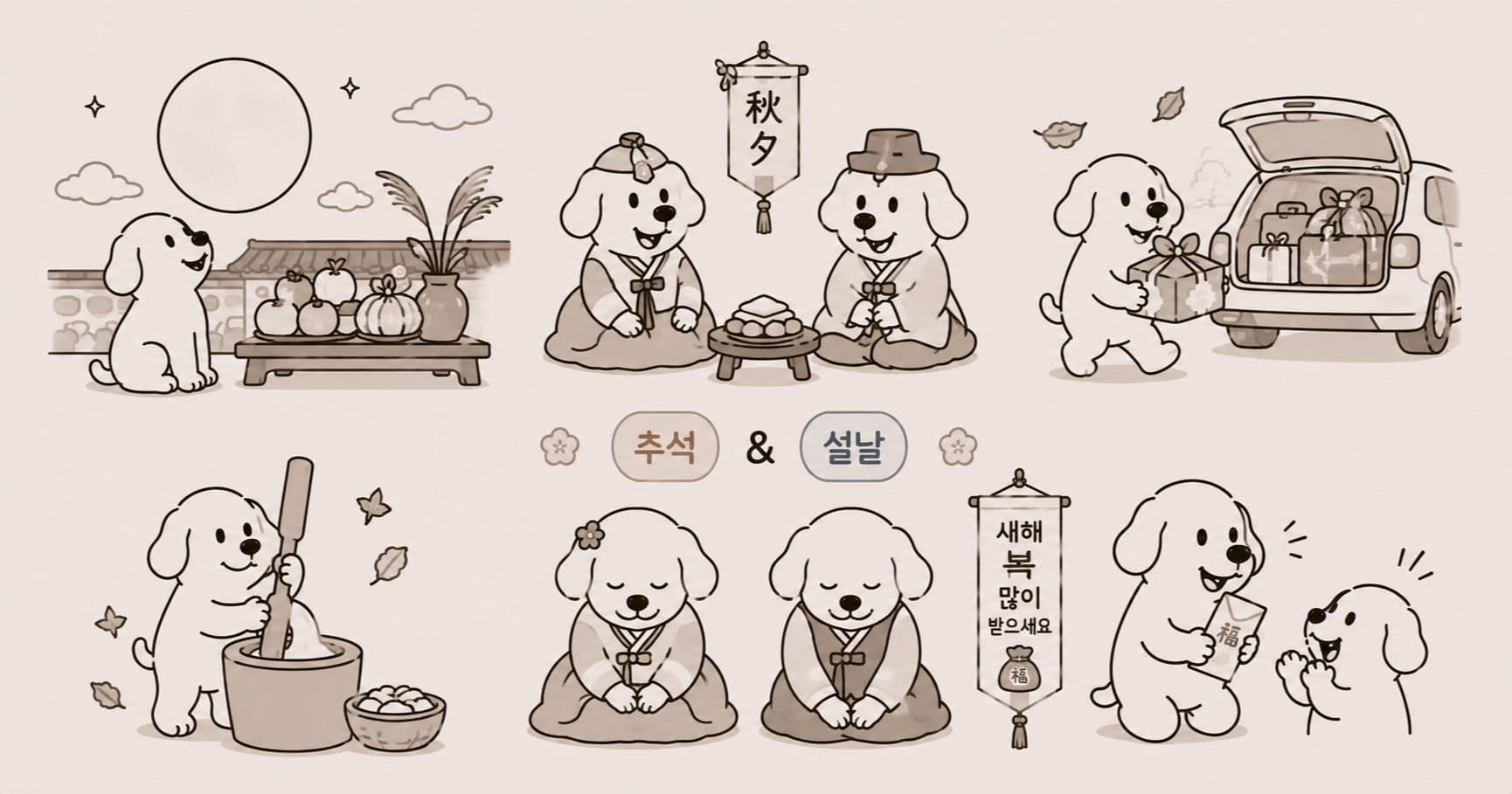
추석 and 설날 are Korea's two biggest holidays — a time for families to gather, perform ancestral rites, eat traditional food, and navigate the traffic of a nation going home.
Twice a year, Korea moves.
Hundreds of millions of car trips. Train tickets sold out weeks in advance. Highways that look like parking lots. Airports full of people carrying boxes of food.
Everyone is going home.
This is 명절 — the Korean traditional holiday season. And the two biggest are 설날 and 추석.
The words
명절
Romanizationmyeongjeol
Meaningtraditional holiday / festive season
💡 The general word for Korea's major traditional holidays. 명절에 고향에 가요 = I go to my hometown for the holiday. The word carries warmth but also the weight of family obligation, travel, and ritual.
설날
Romanizationseollal
MeaningKorean Lunar New Year
💡 The first day of the lunar calendar — usually in late January or February. One of the two most important holidays in Korea. Families gather, perform ancestral rites, eat 떡국 (rice cake soup), and give money in special envelopes to younger family members.
추석
Romanizationchuseok
MeaningKorean Harvest Festival / Mid-Autumn Festival
💡 The 15th day of the 8th lunar month — usually in September or October. Often called Korean Thanksgiving. Families gather to perform ancestral rites, visit graves, eat 송편 (rice cakes), and be together.
The vocabulary
차례
Romanizationchare
Meaningancestral memorial rite
💡 A ritual performed on 설날 and 추석 mornings — offering food to ancestors, bowing, and honoring those who have passed. A central part of both holidays. 차례를 지내다 = to perform the rite.
세배
Romanizationsebae
MeaningNew Year's bow / deep bow to elders
💡 On 설날, younger family members perform a deep bow (세배) to elders. In return, they receive 세뱃돈 (sebatdon) — money in a special envelope. The exchange is both ritual and warm family tradition.
고향
Romanizationgohyang
Meaninghometown / place of origin
💡 고향에 가다 = to go to one's hometown. 명절 is fundamentally about 고향 — returning to where you came from. The word carries deep emotional weight: home, roots, the people who raised you.
민족 대이동
Romanizationminjok daeIdong
Meaningthe great national migration
💡 The unofficial name for the mass movement of people during 명절. 민족 = people/nation. 대이동 = great movement. The entire country seems to travel at once — road congestion is legendary.
At 명절
설날 morning
Family gathered for 설날 at the grandparents' home
할머니
할
다들 왔어? 차례 준비 다 됐어.
Everyone's here? The ancestral rite is all ready.
A
A
네, 할머니. 오래 걸렸어요. 고속도로가 너무 막혔어요.
Yes, grandma. It took a long time. The highway was completely jammed.
할머니
할
명절마다 그렇지 뭐. 자, 세배부터 하자.
It's like that every holiday. Now, let's start with the New Year's bow.
A
A
새해 복 많이 받으세요, 할머니.
Happy New Year, grandma. (lit. Please receive much luck in the New Year)
할머니
할
그래, 건강하고 행복해라. 세뱃돈이다.
Yes, be healthy and happy. Here's your New Year's money.
설날 vs 추석
HolidaySeasonKey elements
설날Late Jan / Feb세배, 세뱃돈, 떡국, 한복
추석Sept / Oct차례, 성묘, 송편, 보름달
Both holidays명절Family, ancestral rites, going home
Greeting (설날)새해 복 많이 받으세요Happy New Year
Greeting (추석)즐거운 추석 되세요Have a joyful Chuseok
Cultural note
명절 is the time Korea most clearly shows its roots. Families that live scattered across the country converge on the homes of the eldest generation — cooking together, sitting together, performing rituals together that have continued for centuries.
But 명절 is also complicated. The labor of preparation falls disproportionately on women in many families — cooking the ancestral food, cleaning, serving. This has become a significant social discussion in Korea, and many younger couples negotiate or change how holidays are structured.
There's also 명절 증후군 (myeongjeol jeunghugun) — holiday syndrome — the stress, anxiety, and exhaustion that the holidays can bring. Family tension, long drives, and the weight of expectation.
And yet: the full moon on 추석 evening, 송편 made with family, a child's first 세배 — these moments are real too. 명절 holds both the obligation and the warmth. Most Koreans wouldn't skip it.