Modern Korea·Beginner·September 22, 2025·4 min read
아이돌 팬덤 용어 — K-pop Slang That Entered Everyday Korean
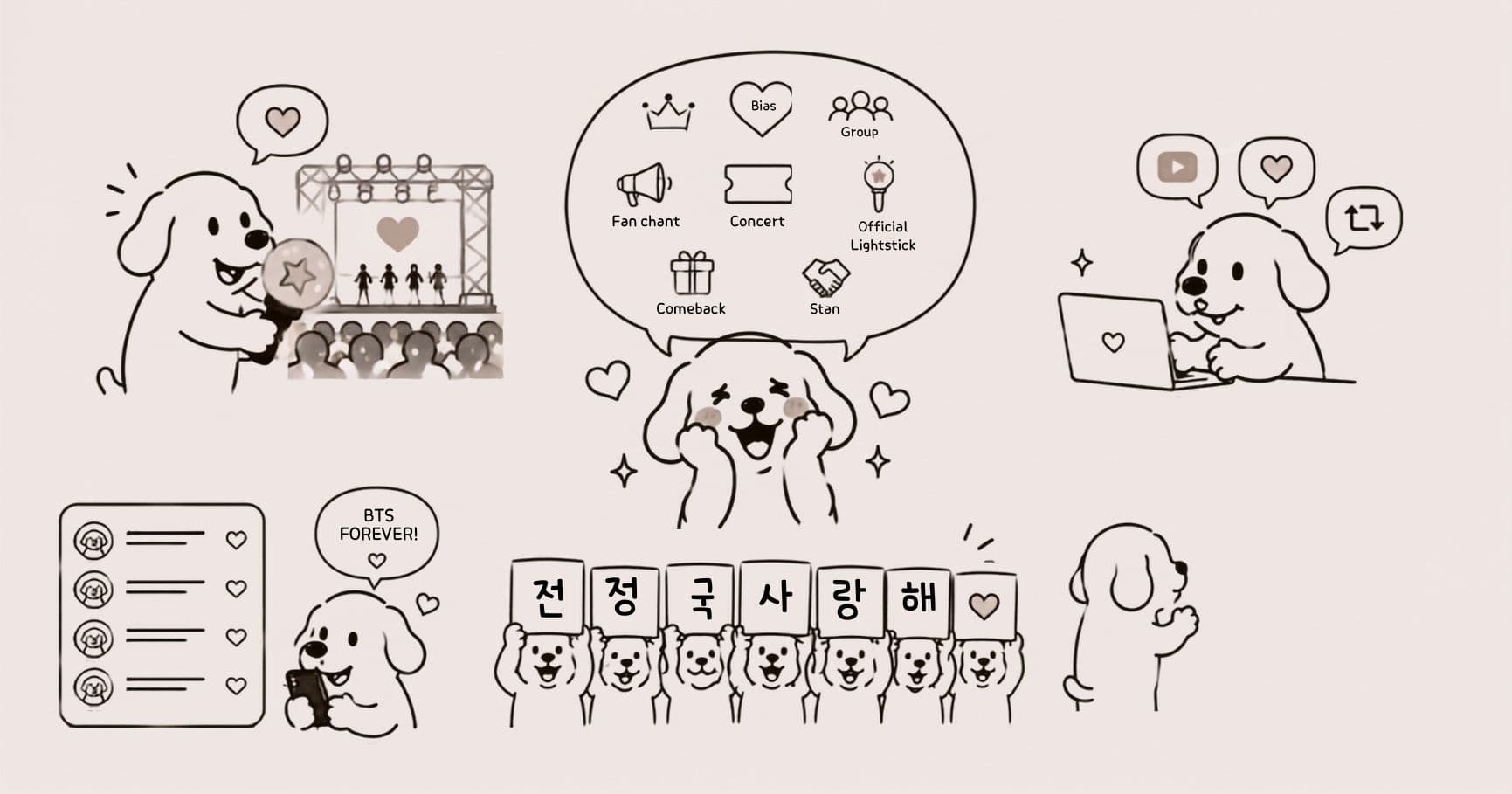
K-pop fandoms invented their own language — and much of it crossed over into everyday Korean. Here's the slang that started with fans and ended up in everyone's mouth.
K-pop fans are some of the most creative language users in Korean.
They needed words for things that didn't have words yet. For the feeling of seeing your favorite artist for the first time. For the light stick colors that identify each fandom. For the moment an artist goes viral overnight.
They invented the words. And then Korea borrowed them.
The words
덕질
Romanizationdeokjil
Meaningbeing a devoted fan / pursuing a fandom hobby
💡 덕 comes from 오타쿠 (otaku, Japanese fan culture). 질 means an activity or behavior. 덕질하다 = to be actively into a fandom. Now used beyond K-pop — 덕질 applies to any intense hobby interest. 저 요즘 독서 덕질 중이에요 = I'm really into reading lately.
덕후
Romanizationdeokhu
Meaninga passionate fan / enthusiast
💡 A Korean softening of 오타쿠. 덕후 = someone who is deeply into something. Less negative than the original connotation — now often said proudly. 아이돌 덕후, 영화 덕후, 운동 덕후. Being a 덕후 means you take your interest seriously.
입덕
Romanizationipdeok
Meaningfalling into a fandom / becoming a fan
💡 입 = enter. 덕 = fandom. 입덕하다 = to enter a fandom, to become a fan. 입덕 계기 = the reason you became a fan. The moment or event that pulled you in. Used sincerely: 그 뮤직비디오 보고 입덕했어요 = I became a fan after watching that music video.
탈덕
Romanizationtaldeok
Meaningleaving a fandom
💡 탈 = exit or leave. 탈덕하다 = to leave a fandom, to stop being a fan. Happens for many reasons. Said without drama: 탈덕했어요 = I'm not a fan anymore. The natural counterpart to 입덕.
최애
Romanizationchoiae
Meaningfavorite / number-one
💡 최 (最) = most. 애 = love/affection. 최애 = your absolute favorite. Originally used for a favorite member in a group (최애 멤버), it spread to mean favorite in any context: 최애 음식, 최애 영화, 최애 카페. Now completely mainstream.
직캠
Romanizationjikkaem
Meaningfancam — a personal fan video of one performer
💡 직접 (direct) + 캠(era). A video shot by a fan focused on one specific performer, tracking only them during a performance. The 직캠 culture of K-pop — fans filming individual members during concerts and broadcasts — spread globally.
Fan vocabulary in everyday life
팬덤 언어 in conversation
Two friends, one just discovered a new artist
A
A
나 요즘 새로운 그룹 입덕한 것 같아. 노래 듣다가 완전 빠졌어.
I think I've just fallen into a new group's fandom. I was listening to their music and got completely pulled in.
B
B
누구야? 최애 누구예요?
Who is it? Who's your favorite?
A
A
아직 최애는 모르겠고, 일단 직캠 다 찾아봤어. 퍼포먼스가 진짜 대박이야.
I don't know my favorite yet, but I looked up all the fancams. The performances are seriously incredible.
B
B
완전 입덕 초반 증상이다. 덕질 시작이네.
Those are classic early-fandom symptoms. Your fan journey has begun.
팬덤 vocabulary that entered everyday Korean
WordOriginNow used for
최애Fandom slangFavorite anything — food, places, people
K-pop fandoms didn't just consume culture — they produced language. The words fans invented to describe their experience, their community, and their relationship to artists became so useful that Korean absorbed them wholesale.
최애 is now everywhere — used by people who've never been in a K-pop fandom in their life. 덕질 appears in job descriptions, in self-introductions, in social media bios. 입덕 has become the casual word for getting into anything new.
This linguistic influence goes both ways. K-pop itself was shaped by fan vocabulary — artists and companies started using fan-invented terms in official content, acknowledging the language their community built.
Language, like music, travels. And K-pop fans have been some of its most inventive carriers.