Modern Korea·Beginner·September 23, 2025·4 min read
당근마켓 — Korea's Secondhand App and the Korean You Need
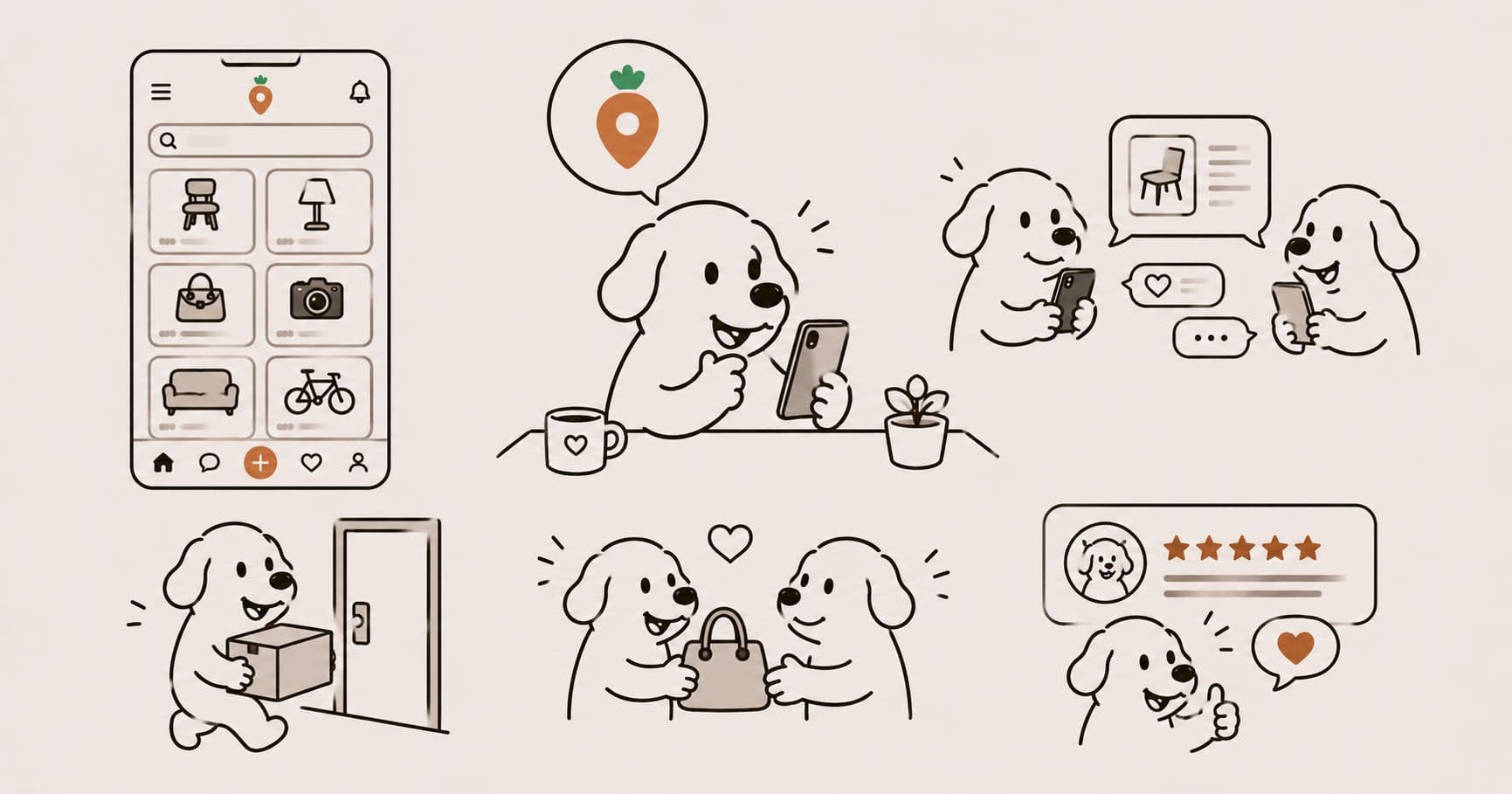
당근마켓 — now just 당근 — is Korea's Craigslist, Facebook Marketplace, and neighborhood app in one. Here's the casual Korean you need to buy, sell, and connect on it.
You want to sell a bookshelf.
You open an app called 당근.
You post a photo. You write a short description. You set a price.
Within an hour, someone nearby messages you: 아직 있나요? (Is it still available?)
This is 당근마켓. And in Korea, it has become one of the most-used apps in the country — not just for buying and selling, but for neighborhood life.
💡 당근 means carrot. The name comes from the phrase 당신 근처 (near you). Now shortened to just 당근 in everyday speech. 당근에 올렸어요 = I posted it on Daangn. Like Craigslist + Facebook Marketplace, but location-verified and heavily used.
The vocabulary
나눔
Romanizationnanum
Meaningfree giveaway / sharing
💡 나누다 means to share or divide. 나눔 on 당근 means a free item — no payment, just come pick it up. 나눔합니다 = I'm giving this away for free. A beloved feature of 당근 culture — generosity between neighbors.
직거래
Romanizationjikgeorae
Meaningin-person direct transaction / meetup trade
💡 직접 (direct) + 거래 (transaction). Meeting the seller/buyer in person to exchange item and payment. 직거래 선호해요 = I prefer to meet in person. Most 당근 transactions happen this way — no shipping, no platform payment.
아직 있나요?
Romanizationajik innayo?
MeaningIs it still available?
💡 The single most common opening message on 당근마켓. Sent by potential buyers who see a listing. 아직 있어요 = it's still available. 죄송해요, 판매됐어요 = Sorry, it's been sold. Learn these three phrases and you can navigate 당근.
네고 가능해요?
Romanizationnego ganeunghaeyo?
MeaningIs the price negotiable?
💡 네고 = negotiation (from English). 네고 가능해요? = Can we negotiate the price? Some sellers write 네고 불가 (no negotiation) in their listings. If nothing is stated, politely asking is fine.
매너 온도
Romanizationmaenneo ondo
Meaningmanner temperature — user reputation score
💡 Every 당근 user has a 매너 온도 (manner temperature) — a score reflecting how well they've treated other users. Starts at 36.5°C (normal body temperature). Good transactions raise it; bad behavior lowers it. A widely understood reputation system.
On 당근마켓
당근 transaction
Buyer and seller arranging a meetup
구매자
구
안녕하세요! 아직 있나요? 책상 보고 연락드려요.
Hello! Is it still available? I'm contacting you about the desk.
판매자
판
네, 아직 있어요. 언제 가능하세요?
Yes, it's still here. When are you available?
구매자
구
이번 주 토요일 오후에 직거래 가능할까요?
Would a direct meetup work this Saturday afternoon?
판매자
판
네, 괜찮아요. 혹시 네고 생각하시나요?
Yes, that works. Are you thinking of negotiating the price?
구매자
구
5,000원만 빼주시면 감사할게요.
I'd appreciate it if you could take off 5,000 won.
판매자
판
알겠어요. 그렇게 해드릴게요.
Okay. I'll do that for you.
당근 essentials
PhraseKoreanWhen to use it
Is it available?아직 있나요?First message to a seller
Still available아직 있어요Seller's confirmation
Already sold판매됐어요Letting a buyer know it's gone
Free giveaway나눔합니다Offering an item for free
Negotiate?네고 가능해요?Asking politely about price
Cultural note
당근마켓 evolved beyond a secondhand marketplace. It added neighborhood feeds, local jobs, community boards, and business listings. It became a hyperlocal community platform — a digital version of the neighborhood bulletin board.
The 매너 온도 system reflects something distinctly Korean: the idea that how you treat people in transactions matters and should be tracked. A low 매너 온도 is a real social signal. Keeping yours high — responding quickly, being honest about item condition, showing up on time for 직거래 — is just good 당근 etiquette.
For anyone living in Korea, 당근 is practical immediately. Furnished your apartment with secondhand items from 당근, sold things you no longer need, found a used bicycle — this is what the app is for. And almost every exchange happens in the casual, neighborly Korean that 당근 culture built.