Spring in Korea
Cherry blossoms, yellow dust, and that restless spring feeling — 10 words that capture what Korea actually feels like in spring.
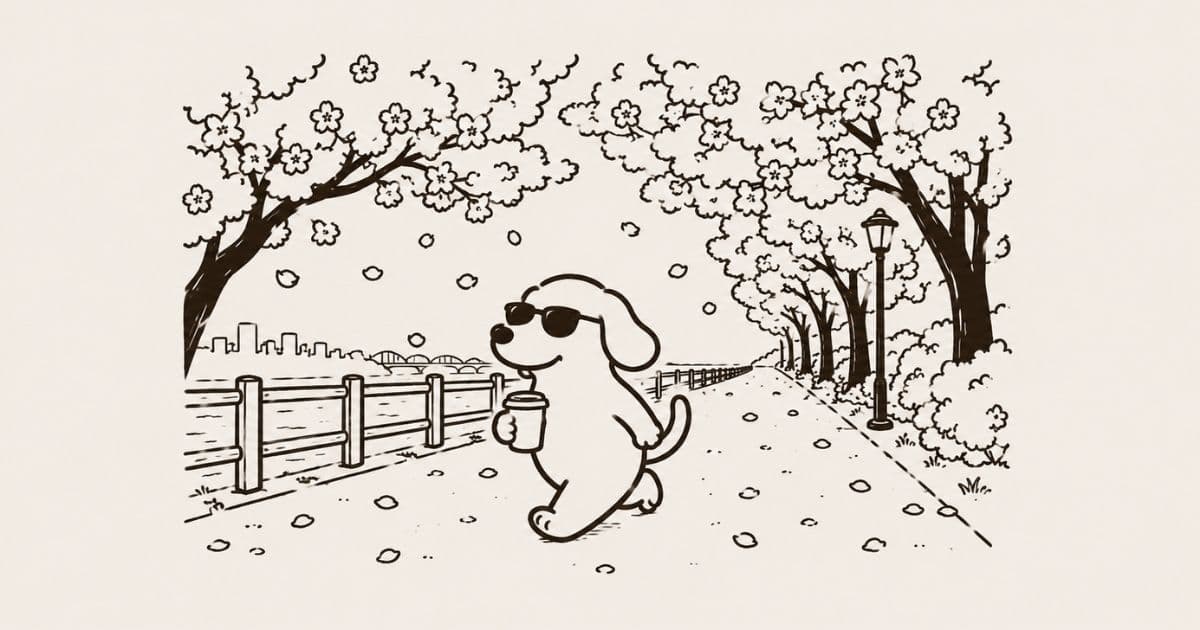
There's a specific two-week window every spring in Korea when everything changes.
The cherry blossoms come out, the Han River fills up with people eating chicken and drinking beer on picnic mats, and every park in Seoul looks like a scene from a drama. Then the yellow dust rolls in from China, everyone checks their air quality app, and it's over.
Korean spring is short, dramatic, and has its own vocabulary.
The image everyone knows
벚꽃 season isn't just a backdrop — it's an event. Koreans track the bloom forecast the same way others track concert tickets, planning weekends around peak color. When 벚꽃 is out, the whole country goes outside.
The ritual
A 나들이 doesn't need a destination. It just needs good weather, good company, and somewhere to sit outside. The point is being out, not getting anywhere.
Hear it in action
Spring plans
Two coworkers during lunch break — cherry blossom season has just started
The other side of spring
Korea in spring isn't all pink and pleasant. There's a harder side that every resident knows.
When 황사 is bad, the sky turns a pale gray-yellow. People put on masks, skip their morning run, and close their windows. The air quality app becomes as essential as the weather app. Some spring days the blossoms are in full bloom and the air is unbreathable at the same time.
춘곤증 is officially recognized enough that it comes up in workplaces every March. Your body adjusts to longer days, warmer temperatures, and a change in diet — and for a few weeks, it's exhausted. If your Korean coworkers look half-asleep, 춘곤증 is the likely explanation.
Spring has its own mood
봄바람 shows up constantly in Korean songs and dramas. It's the feeling of walking outside for the first time after a long winter and sensing that something is about to happen. It's not quite nostalgia and not quite excitement — something in between.
Cultural note
Two more words that round out the season:
개나리 (gaenar-i) — bright yellow forsythia flowers that bloom just before the cherry blossoms. When you see 개나리 lining the streets, spring has officially started. It's the opening act.
봄나물 (bom namul) — wild spring greens like 냉이, 달래, and 쑥 that Koreans forage or buy at the market. Eating seasonal greens in spring is a tradition that connects modern Koreans to something older. You'll see them piled up at every 시장 in March and April.
Korean spring is intense precisely because it's brief. The blossoms last two weeks. The good air might only last a few days at a time. Koreans don't take it for granted — they go outside, they gather, they eat the seasonal food. The vocabulary reflects that urgency.
Spring words at a glance
🎙️ Voice generated with ElevenLabs
elevenlabs.io