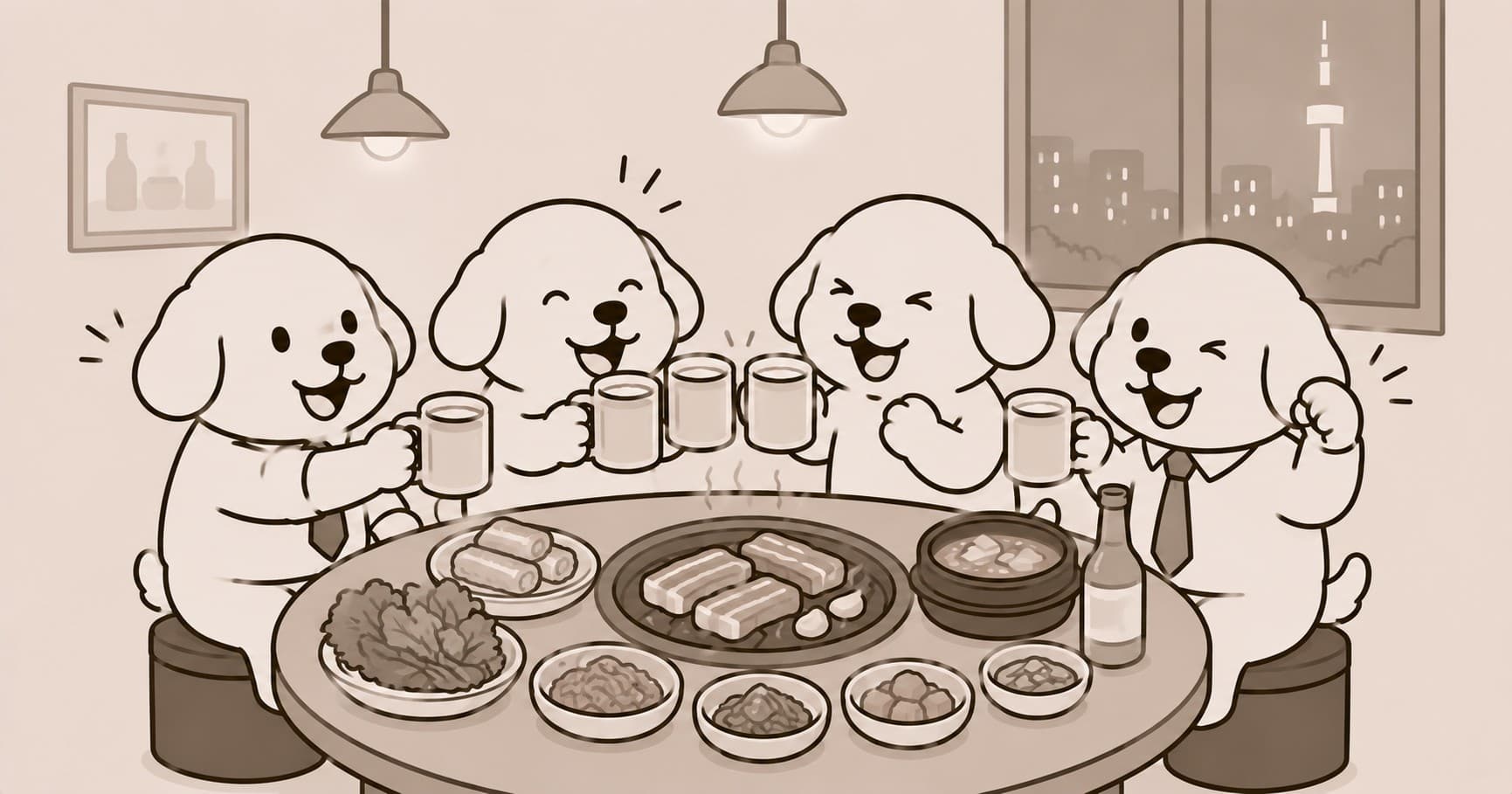
회식 is the Korean work dinner — and it's not really optional. Here's what it is, what happens, the vocabulary you need, and why it's slowly changing.
It's Friday evening.
Your team leader says: 오늘 회식 어때요?
How about a work dinner tonight?
There is only one correct answer.
The word
회식
Romanizationhoesik
Meaningwork dinner / team dinner / company social meal
💡 회 (會) means gathering. 식 (食) means eating. 회식 is a meal (and usually drinks) shared by a workplace team. Not exactly optional — refusing without a very good reason is socially difficult, especially for junior employees.
The vocabulary
1차
Romanizationilcha
Meaningfirst round (of the night)
💡 Korean social outings often go in rounds. 1차 is the first stop — usually a meal. 2차 is the next stop (often a bar or 노래방). 3차 follows if the night continues. 오늘 몇 차까지 해요? = How many rounds are we doing tonight?
건배
Romanizationgeonbae
Meaningcheers / toast
💡 Said when raising glasses. 건배! is the most common. 위하여! (to/for it!) is also used — often said when someone gives a short speech and the group responds with 위하여! in unison.
폭탄주
Romanizationpoktanju
Meaningbomb shot — soju dropped into beer
💡 폭탄 means bomb. A shot glass of soju dropped into a glass of beer and drunk in one go. Very common at 회식. Sometimes called 소맥 (소주 + 맥주 = soju + beer, mixed).
눈치껏 마시다
Romanizationnunchikkeot masida
Meaningdrinking according to the social cues
💡 At a 회식, pouring drinks for others before yourself, not refusing when a senior pours for you, and matching the group's pace — all of this is 눈치껏. Knowing the unwritten drinking etiquette.
회식 문화
Romanizationhoesik munhwa
Meaningwork dinner culture
💡 The broader cultural phenomenon. 회식 문화 has been both celebrated (bonding, team cohesion) and criticized (pressure to drink, late nights, no real choice). Younger generations are increasingly pushing back on obligatory 회식.
At the 회식
회식 in action
Work team at a Korean BBQ restaurant
팀장
팀
자, 다들 왔죠? 오늘 수고 많았어요. 한 잔씩 따라요.
Okay, everyone's here, right? You all worked hard today. Let's pour a drink each.
A
A
팀장님, 제가 따라드릴게요.
Team leader, let me pour for you.
팀장
팀
고마워요. 자, 건배! 올해도 수고했어요.
Thank you. Okay — cheers! You've all worked hard this year.
모두
모
위하여!
To us!
B
B
(옆 사람에게) 소맥 만들어 드릴까요?
(to the person next to them) Shall I make you a somaek?
The 회식 structure
RoundKoreanWhat usually happens
First round1차Dinner — Korean BBQ, seafood, or a restaurant
Second round2차Bar, hof, or 포장마차 for more drinks
Third round3차노래방 — the night's final act
Bill계산Usually paid by the team leader or company
Leaving early먼저 가도 될까요?Always ask — never just disappear
Cultural note
회식 has long been a defining feature of Korean work culture. It's where hierarchies loosen slightly, where bosses become more human, where the team bonds outside of work performance. The seniority rules of the office soften — but don't disappear.
But 회식 culture is changing. Younger Korean workers are increasingly vocal about not wanting obligatory social drinking. Companies are introducing alternatives — lunch instead of dinner, coffee outings, or simply making attendance genuinely optional. The word 회식 강요 (forced 회식) has entered the conversation as something workers now push back on openly.
If you work in Korea, 회식 will find you. Going occasionally is part of building relationships. Knowing the vocabulary — and the etiquette — makes it much easier to navigate.