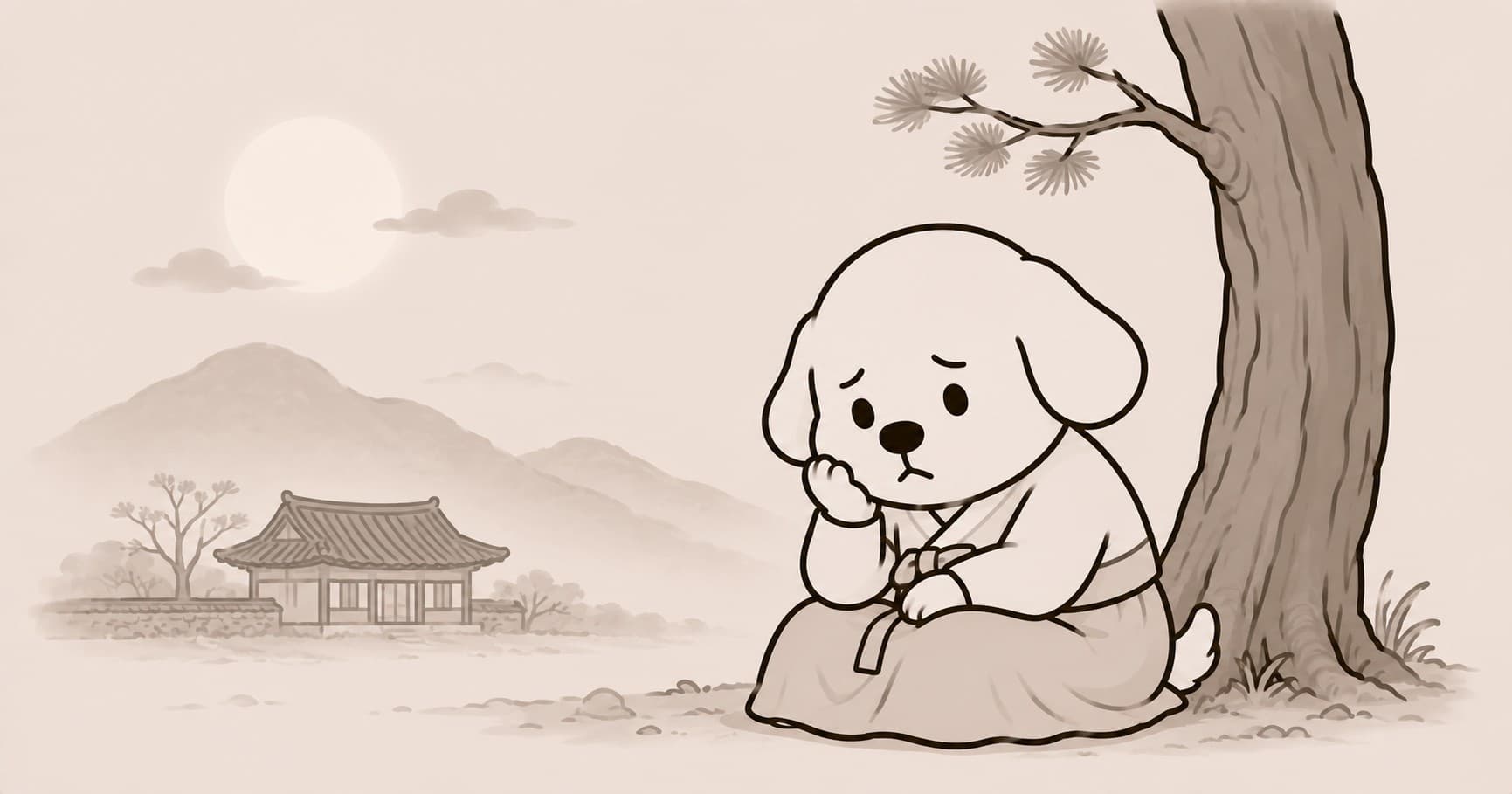
한 is a Korean emotional concept with no direct translation — a deep, collective feeling of grief, injustice, longing, and resilience woven into Korean history, music, and art.
There is a word in Korean that scholars, artists, and historians keep returning to.
It appears in the lyrics of traditional songs. In the films of Bong Joon-ho. In discussions of Korean history. In conversations about what makes Korean art feel the way it does.
The word is 한.
And there is no word for it in English.
The word
한
Romanizationhan
Meaninguntranslatable — grief, injustice, longing, sorrow that can't be resolved
💡 한 (恨) is a deep emotional state — collective and individual at once. It carries grief, resentment at injustice, longing for what was lost, and a kind of endurance through sorrow. It is neither bitterness alone nor sadness alone. It is something particular to the Korean experience of history.
Understanding 한
한 is not a simple emotion. It has several layers that work together:
슬픔
Romanizationseulpeum
Meaningsadness
💡 The most basic layer of 한 — a deep sadness, often for things that cannot be changed. Loss, separation, grief. But 한 goes further than simple 슬픔.
억울함
Romanizationeogulham
Meaningthe feeling of injustice / wrongful suffering
💡 억울하다 means to feel wronged, to suffer something unfair. 억울함 is a core ingredient of 한 — the sense that something terrible happened that should not have, and that no one acknowledged it.
그리움
Romanizationgeurium
Meaninglonging / yearning
💡 그립다 means to miss someone or something deeply. 그리움 — longing — is another layer of 한. The yearning for what was lost: a homeland, a person, an era, a life that could have been.
한이 맺히다
Romanizationhani maechida
Meaningfor 한 to become lodged / for grief to be stuck inside
💡 맺히다 means to form or become fixed. 한이 맺히다 describes the state where unresolved grief, injustice, or longing becomes lodged deep inside a person — unable to be released. A profound expression.
한 in Korean art and music
Talking about 한
A conversation about a traditional Korean song
A
A
이 노래 들으면 왜 이렇게 마음이 무거워지죠?
Why does listening to this song make my heart feel so heavy?
B
B
한이 담긴 노래거든요. 판소리나 민요에는 한이 많이 녹아 있어요.
It's a song filled with han. Pansori and folk songs are saturated with han.
A
A
한이 정확히 뭐예요? 번역이 어렵더라고요.
What exactly is han? I find it hard to translate.
B
B
슬픔이기도 하고, 억울함이기도 하고... 그냥 오래 참아온 마음이라고 할까요.
It's sadness, it's a sense of injustice... you might call it a feeling of something long endured.
Where 한 appears in Korean culture
FormKoreanHow 한 appears
Traditional music판소리The voice cracks, strains, and releases
Folk song민요Longing, loss, separation as core themes
Film한국 영화Injustice, class, unresolved tragedy
History역사Colonization, war, division of the nation
Everyday speech일상한이 맺혔다 — used for personal grief too
Cultural note
한 is sometimes explained as what Korea produced from centuries of hardship — invasion, colonization, war, national division, poverty — endured without sufficient acknowledgment or resolution. It is grief that had no safe place to go, and so it went into the music, the stories, the way of expressing feeling.
But 한 is not only about suffering. There is a counterpart concept: 흥 (heung) — a spontaneous joy, a burst of energy and delight. Many scholars describe Korean emotional culture as living between these two poles: 한 (deep sorrow) and 흥 (sudden joy). 판소리 holds both — a performer can move from raw grief to infectious energy in the same song.
한 is not depression. It's something more resilient than that — a sorrow that has been carried long enough to become part of the self, without destroying it.
That's what makes it untranslatable. And worth knowing.