빨리빨리 — The culture of fast
Korea moves faster than almost anywhere else on earth. 빨리빨리 isn't just a phrase — it's a national operating mode. Here's where it comes from and what it feels like to live inside it.
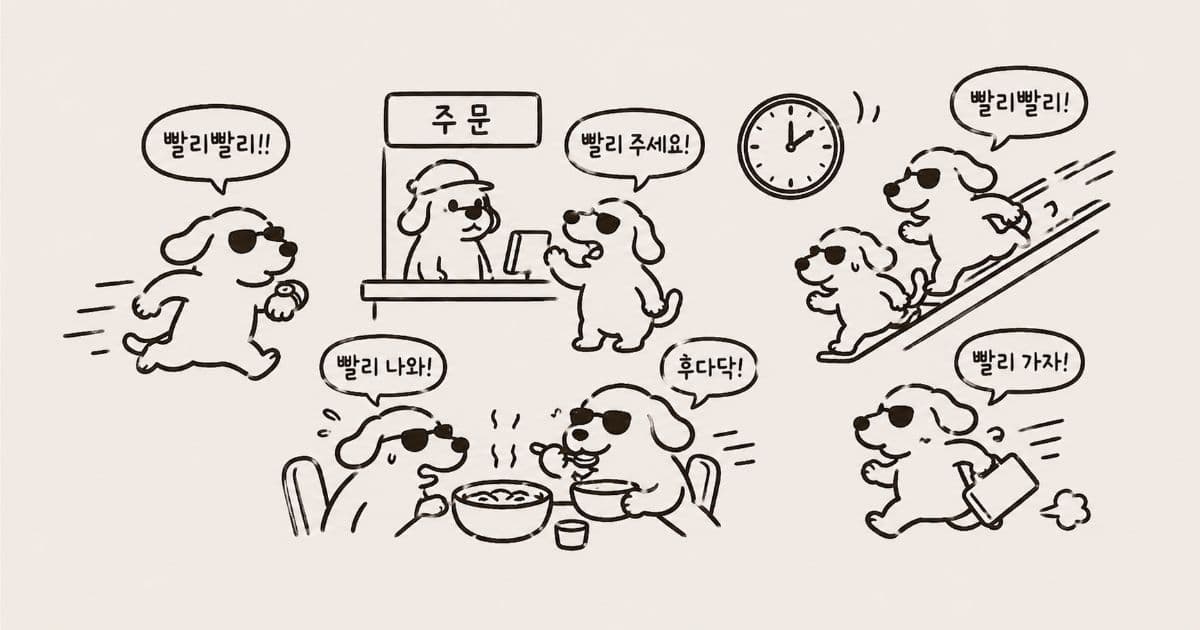
You order coffee. It arrives in ninety seconds.
You press the elevator button. If it doesn't come in ten seconds, you press it again.
The delivery app says forty minutes. It arrives in twenty.
Welcome to 빨리빨리 culture.
The word
Hear it in action
Morning rush
Family kitchen, 8am — someone is going to be late
Where it came from
빨리빨리 culture accelerated sharply during Korea's rapid industrialization in the 1960s–80s. The country rebuilt itself from one of the poorest nations in the world to a major global economy in a single generation. Speed wasn't just a preference — it was survival.
That urgency became cultural memory. Even now, when Korea is prosperous and stable, the pace remains.
The upside and the tension
빨리빨리 culture means things get done. Infrastructure improves. Services are efficient. People are rarely late.
But it also creates pressure. The expectation of speed applies to people too — careers, milestones, responses, decisions. There's a reason 번아웃 (burnout) is a word Koreans know well.
The language of speed
How 빨리빨리 sounds in everyday Korean:
Cultural note
Foreigners in Korea often experience 빨리빨리 as one of two things: exhilarating (everything just works, immediately) or exhausting (there's no option to move at your own pace).
Most Koreans will tell you it's both, depending on the day. The culture is aware of its own speed — and slowly, conversations are opening up about what it costs.
🎙️ Voice generated with ElevenLabs
elevenlabs.io