반찬 — Why Korean Side Dishes Are Unlimited and Free
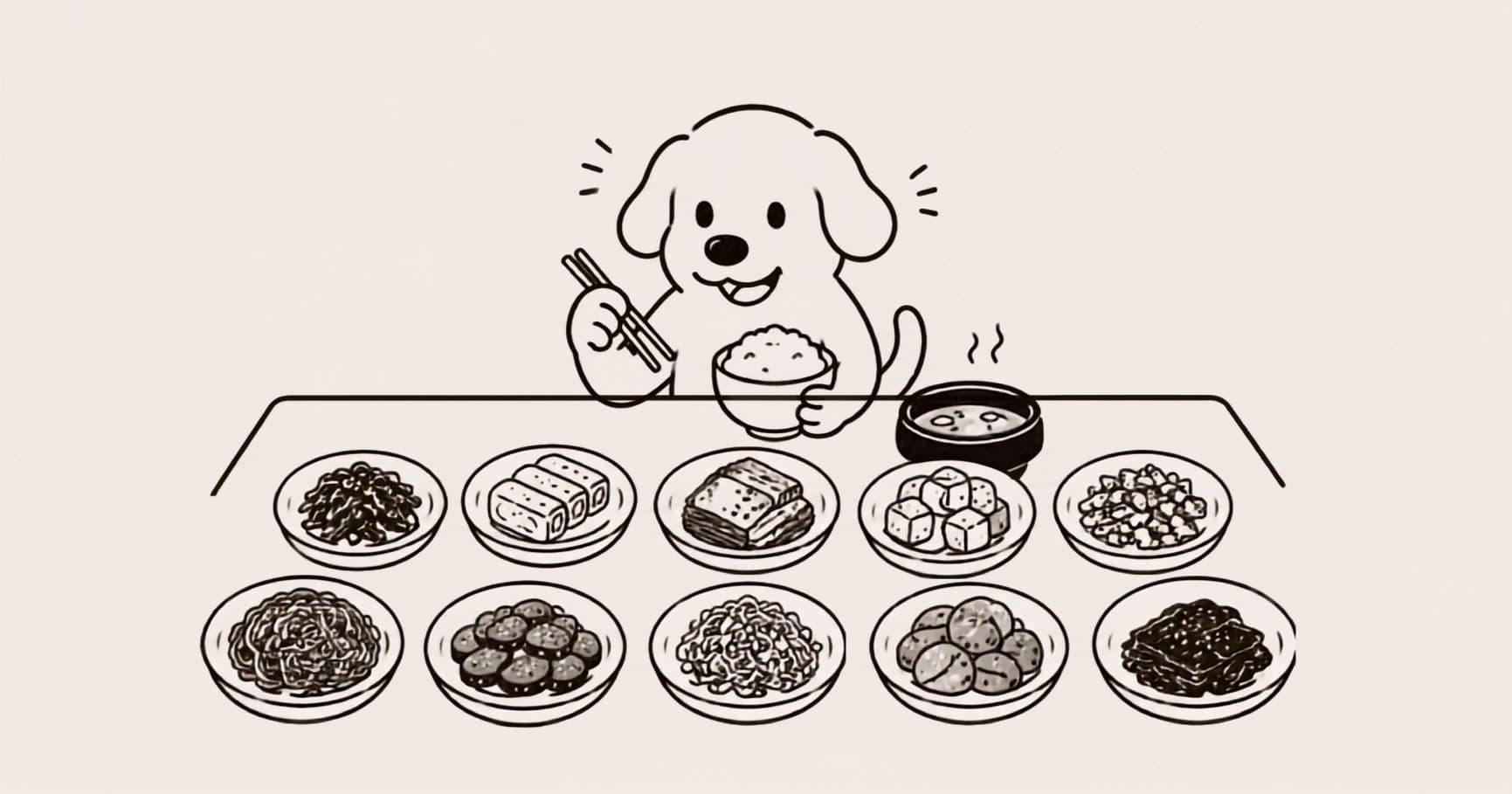
You order one dish at a Korean restaurant and six small plates arrive before your food. Free, unlimited, and kind of the whole point — this is 반찬.
You sit down at a Korean restaurant.
You order one dish.
Before your food even arrives, the table fills up. Small plates — kimchi, spinach, radish, bean sprouts, fish cake, dried seaweed. Six of them. Maybe more.
Nobody ordered them. Nobody charged you for them.
This is 반찬. And in Korea, it's not a bonus. It's the baseline.
The word
반찬
Romanizationbanchan
Meaningside dishes
💡 반 (飯) means rice. 찬 (饌) means side food — things eaten alongside rice. So 반찬 is literally 'rice accompaniments'. In practice, it means all the small shared plates that come with a Korean meal.
The vocabulary
밑반찬
Romanizationmitbanchan
Meaningbasic / standard side dishes
💡 The side dishes a restaurant always provides, regardless of what you order. These are what arrive at the table automatically. 밑 means 'beneath' or 'base.'
리필
Romanizationripil
Meaningrefill
💡 From the English 'refill'. If you finish a side dish, you can ask: 이거 리필 돼요? (Can I get a refill of this?). Almost always yes. Almost always free.
공기밥
Romanizationgongibap
Meaninga bowl of rice (served separately)
💡 공기 means bowl. 공기밥 is a single serving of rice in a bowl, ordered separately from the meal. Usually 1,000–2,000 won extra. Side dishes come free; rice sometimes doesn't.
국
Romanizationguk
Meaningsoup (included in a set meal)
💡 Many 반찬 sets include a small soup. It's not an extra order — just part of the table setting. Drink it, or use it to wash down bites of rice.
젓가락
Romanizationjeotgarak
Meaningchopsticks
💡 Korean chopsticks are flat and metal — different from the wooden chopsticks used in Japan and China. You use them to pick up 반찬 from the shared plates.
At the table
Asking for refills
At a Korean restaurant, mid-meal
A
A
저기요, 김치 리필 되나요?
Excuse me, can we get a refill on the kimchi?
직원
직
네, 잠깐만요.
Yes, one moment please.
B
B
시금치도 더 주세요!
More spinach too, please!
직원
직
네, 가져다 드릴게요.
Sure, I'll bring it right over.
A
A
감사합니다. 공기밥도 하나 추가해 주세요.
Thank you. And one more bowl of rice, please.
Common 반찬 you'll see everywhere
Side dishKoreanWhat it is
Fermented cabbage김치Always on the table
Seasoned spinach시금치무침Blanched, sesame oil, garlic
Bean sprouts콩나물Lightly seasoned, crunchy
Braised potatoes감자조림Sweet-savory glaze
Dried seaweed김Crispy, salted, eaten with rice
Cultural note
반찬 isn't a courtesy. It's structural.
Korean meals are designed around shared eating. You order your main dish, but the table — with its rice and rotating small plates — is communal. Everyone reaches into the same bowls. Nobody has a private plate of side dishes. This sharing is the point.
The number and quality of 반찬 also signals something about the restaurant. A good 한정식 (Korean table d'hôte) restaurant might bring fifteen or twenty different side dishes before the main course even arrives. Cheap lunch spots bring three or four.
Either way, you can ask for more. That's the rule. 리필 is always the right word.