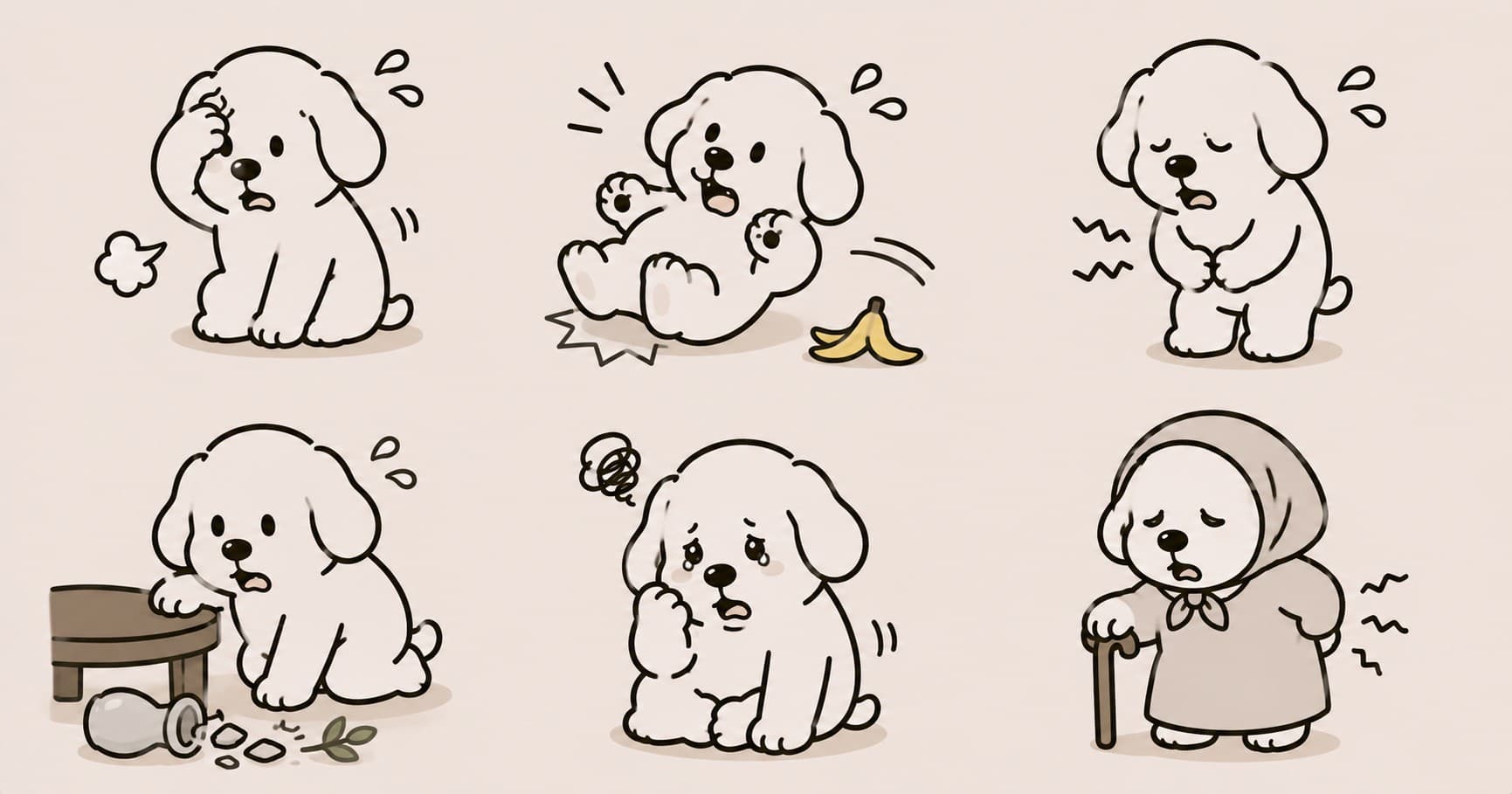
아이고 is one phrase with a hundred emotions. It can mean oh no, oh my, ouch, ugh, wow, poor thing, and more — all depending on how you say it.
You stub your toe.
아이고.
Someone tells you a sad story.
아이고.
You're exhausted after a long day.
아이고.
You're a grandmother watching your grandchild do something adorable.
아이고.
Same word. Completely different feeling each time.
The word
아이고
Romanizationaigo
Meaningoh my / oh no / ow / goodness
💡 An interjection with no direct English translation. The meaning changes completely depending on tone, context, and who is saying it. One of the most human words in Korean — used across all ages, all situations, all emotions.
The many faces of 아이고
아이고, 아파!
Romanizationaigo, apa!
MeaningOw, that hurts!
💡 The pain version. Said when you bump into something, hurt yourself, or feel sudden physical discomfort. The sharper and shorter the 아이고, the more urgent the pain.
아이고, 어떡해
Romanizationaigo, eotteoke
MeaningOh no, what do we do
💡 The worried version. Used when something goes wrong and you're distressed about it. Often said while shaking the head slightly.
아이고, 고생했어요
Romanizationaigo, gosaenghaesseoyo
MeaningOh, you worked so hard / Poor thing, you must be tired
💡 The sympathetic version. Older Koreans say this when someone has clearly worked hard or been through something difficult. It's warm, not pitying.
아이고, 예뻐라
Romanizationaigo, yeppeora
MeaningOh my, so pretty / Oh, how cute
💡 The affectionate version. Grandparents say this to children and grandchildren. The tone is soft, melting, full of love. Same word, completely different energy.
In conversation
아이고 in real life
Grandmother visiting her adult child's home
할머니
할
아이고, 왔어? 많이 컸네.
Oh my, you came? You've grown so much.
A
A
할머니, 오래 기다리셨어요?
Grandma, did you wait long?
할머니
할
아이고, 아니야. 근데 얼굴이 왜 이렇게 피곤해 보여?
Oh goodness, no. But why do you look so tired?
A
A
요즘 일이 많아서요.
I've had a lot of work lately.
할머니
할
아이고, 고생했어. 밥 먹었어?
Oh, you've worked so hard. Have you eaten?
Tone changes everything
Tone / context아이고Feeling behind it
Sharp, short아이고!Sudden pain or shock
Long, falling아이고~Exhaustion, resignation
Soft, warm아이고...Sympathy, affection
Repeated아이고아이고Deep distress or grief
Bright, high아이고!Delight at something cute
Cultural note
아이고 is one of the most distinctly Korean sounds you'll encounter. It crosses generations — young people say it, old people say it, and it means something slightly different each time.
You'll also hear the shorter 아이구 and 어이구, which are soft variations of the same word. And 아고, used more by older speakers in some regions.
The reason 아이고 is worth learning early is simple: when something happens — something surprising, painful, sweet, or sad — this is the sound Koreans make. Learning it means understanding what's happening in the room even before you understand the words.